

X updated its creator revenue share program: How does it affect creators?
Grok is now watching every post you publish on X in real time and it knows exactly what engagement bait looks like.

If you earn money on X or are working toward it, something important happened yesterday that you need to read before your next post.
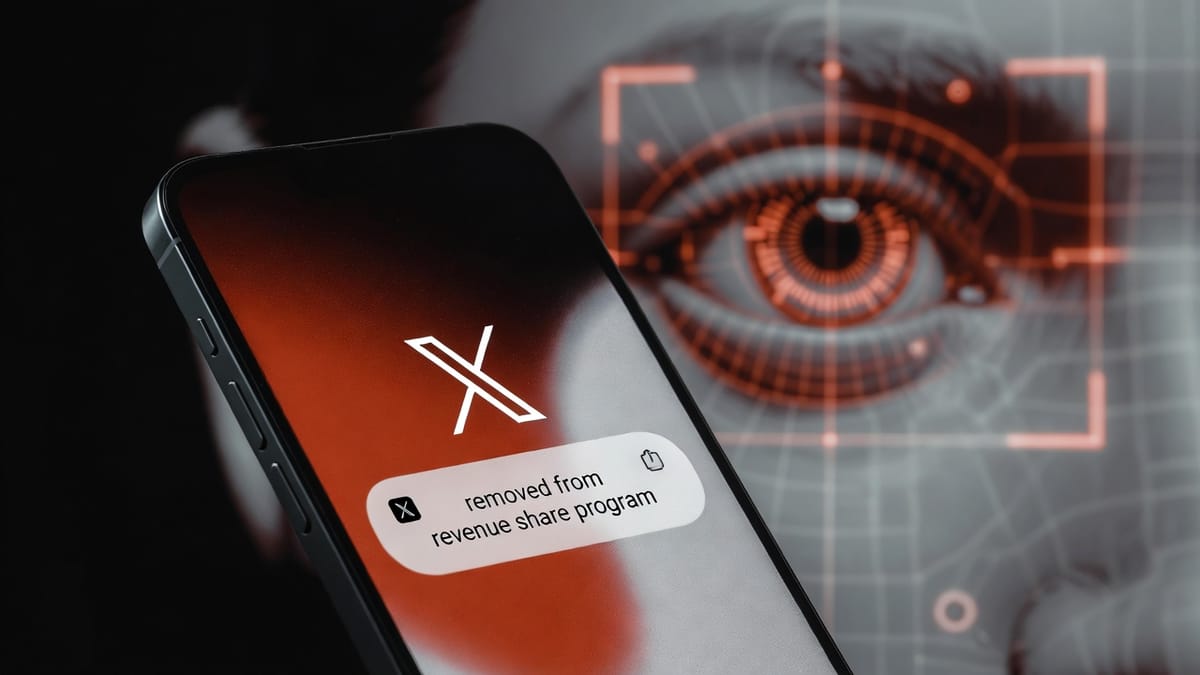
Nikita Bier, X's head of product, published a series of updates to the platform's creator revenue share program on July 16, 2026. The changes are live now. They affect how you earn, what gets you removed from the program, and how the platform is using AI to enforce its rules at a scale that makes the old workarounds completely obsolete.
This is not a small policy tweak buried in a terms of service update. It is a direct, public announcement from the person running X's product strategy, and it has immediate implications for every creator on the platform.
Here is everything that changed and exactly what it means for your content strategy.
Advertisement
Create, grow and monetize your newsletter with Beehiiv. Access the best tools available in email, helping your newsletter scale and monetize like never before.

The announcement, in plain language
The updates outline several simultaneous changes to the revenue share program. Taken together, they paint a clear picture of the direction X is moving: toward rewarding genuine, original creators and systematically removing everyone who is trying to game their way to a payout.
Here are the specific changes announced:
Engagement solicitation is now a removal offense. Soliciting engagements, using phrases like "I'll follow everyone who replies," three or more times will now result in removal from the program, and the account will be forwarded to the policy team for suspension. This is not a warning system. Three violations and you are out of the revenue share program entirely, with your account flagged for potential suspension on top of that.
Grok is now catching all violations automatically. X's Grok AI system is now actively detecting these violations at platform scale. This is the part most creators are underestimating. Grok is not a human moderation team that can be overwhelmed or inconsistent. It is an AI system running in real time, processing every post as it is published. The tactics that previously slipped through because enforcement was manual and inconsistent are no longer viable.
Duplicate content detection has been significantly upgraded. X has updated its models for detecting duplicated content, in alignment with its latest rules about how original creators get paid. This builds on work the platform started earlier in the year to better identify original creators and penalize aggregators. The message is now backed by enforcement infrastructure that did not previously exist at this scale.
Impressions are being reallocated from aggregators to original creators. X is now redirecting impressions from aggregator posts back to the original authors. If a large account re-uploads your video or copies your content and earns impressions from it, those impressions are now being reassigned to you as the original creator. This is a significant shift that protects smaller creators from having their work monetized by accounts with larger followings.
The backstory: why X is making these changes now
These updates do not come out of nowhere. They are the latest step in a consistent and accelerating push by X to clean up a revenue share program that had developed serious gaming problems.
Coordinated engagement schemes, where groups of accounts would systematically reply to each other's posts to inflate engagement metrics and trigger payouts, had become widespread. Groups organizing this kind of activity outside the platform, primarily through messaging apps, had become responsible for a significant share of reply spam on X.
On top of that, a large volume of video content from top accounts on the platform turned out to be re-uploaded from other users, some of it years after the original had first gone viral. With video making up close to half of all impressions on X, the combination of video theft and engagement gaming had created a situation where meaningful creator revenue was flowing to accounts contributing nothing original to the platform.
X's response has been methodical. The platform doubled its revenue sharing pool. It changed the compensation model to exclude impressions from replies. It launched a video editor to reduce barriers to original content creation. It introduced the mutual algorithm update earlier this week. And now it has upgraded its enforcement infrastructure with Grok-powered detection and impression reallocation from aggregators to original creators.
Every single one of these changes points in the same direction. X is building a creator economy where the only sustainable path to revenue is genuine original content that earns real engagement from real people. Everything else is being systematically closed off.
Advertisement
Generate video ideas from outlier data, write YouTube scripts in 12 minutes, and track competitor channels. Join 4,593 YouTubers growing with Subscribr AI.


The AI disclosure rule that has been in place since March
One update that deserves specific attention, because it is easy to miss and the consequences are severe, was announced earlier this year and remains fully in force alongside these new changes.
Users who post AI-generated videos of an armed conflict without adding a disclosure that the content was made with AI will be suspended from the creator revenue sharing program for 90 days. If they continue to post misleading AI content after the suspension lifts, they will be permanently suspended from the program.
This rule exists because during active conflict situations, AI-generated video content that is not labeled as such creates a genuine misinformation risk. But the practical implication for creators is broader than just conflict footage. X is establishing a clear expectation that AI-generated content must be disclosed as such. That norm is likely to extend beyond conflict footage as the platform continues to develop its AI content policies.
If you use AI to generate any video content, label it. Do not assume the rule only applies to conflict footage. The direction of travel on this policy is toward more disclosure requirements, not fewer.
What these changes mean for your revenue share strategy right now
Here is specifically what these updates require you to change, maintain, or start doing differently.
Stop soliciting engagement immediately if you have been doing it. The threshold is three violations. If you have been using phrases that directly ask for replies, follows, or other engagement actions as part of a quid pro quo, stop now. Not gradually. Now. Grok is catching all of these in real time, and the consequence of crossing the line three times is removal from the program with your account forwarded for suspension review. There is no revenue share strategy worth that risk.
Audit your content for anything that could be classified as engagement bait. Beyond explicit solicitation, review your recent posts for anything that could be interpreted as encouraging artificial engagement. Engagement bait patterns are already a distribution penalty on X. With the upgraded Grok detection, they are now also a program removal risk. The line between a genuine call to action and engagement solicitation is clearer than it used to be: asking your audience a real question you genuinely want their perspective on is fine. Offering to follow anyone who replies is not.
Original content is now the only viable long-term strategy. If any part of your current content strategy involves re-uploading content from other creators, even with credit, even with minor edits, that approach is now actively penalized at both the distribution and monetization level simultaneously. Impressions from aggregated content are being reallocated to original authors. Duplicate content detection has been upgraded. The revenue share program explicitly rewards original, high-quality content. This is not ambiguous and it is not going to change direction.
Use the new video editor to create original video content. X launched a new video editor and recorder in the iOS app earlier this month, including the ability to overlay captions in multiple languages, customize their appearance, and use a green screen feature for adding custom backgrounds. These tools exist specifically to reduce the barrier to creating original video content directly on X. Video makes up close to half of all impressions on the platform. Original video created through X's own tools is exactly what the current algorithm and revenue share system are designed to amplify and reward.
Build your mutual network deliberately. The mutual algorithm update from earlier this week is directly connected to the revenue share changes. Your mutuals are the accounts most likely to see your content early, engage genuinely, and trigger the algorithmic distribution that determines whether your post reaches a wider audience. That early engagement from real, mutual connections is now one of the cleanest signals available to the algorithm that your content is worth amplifying. Build that network intentionally.
Label all AI-generated content clearly. Whether the content involves conflict footage or not, establish the habit of disclosing when content has been generated or significantly assisted by AI tools. X's policy in this area is moving toward stricter disclosure requirements, not looser ones. Getting ahead of that direction protects your program eligibility and positions you as a trustworthy creator in an environment where undisclosed AI-generated content is increasingly penalized.
What X is becoming for creators
Taken together, the updates from this week tell a consistent story about what X is trying to become as a platform for creators.
X is building toward a creator economy that rewards genuine community, original content, and real engagement. Every enforcement action targets a specific behavior that produces the appearance of those things without the substance. Engagement solicitation produces replies without real interest. Content aggregation produces impressions without original contribution. Coordinated engagement groups produce metrics without genuine audience connection.
Reposts and commentary remain a core pillar of X. The revenue share program, however, is being explicitly redirected toward creators who are generating something genuinely new, not toward those who have built audiences and income streams by redistributing other people's work.
For creators who have been doing the right things already, building original content, engaging genuinely with their audience, and growing through real connection rather than gaming, these changes are good news. The competition from accounts gaming the system is being systematically removed. The revenue that was being captured by aggregators and engagement farmers is being redirected toward original creators.
For creators who have been relying on any of the behaviors now being actively enforced against, the window to change approach has effectively closed. Grok is running at platform scale. The detection models have been upgraded. The enforcement consequences are severe and immediate.
The platform has made its position clear. The question now is simply whether your content strategy is aligned with it.