

The real reason social media platforms copy each other: It's all about money
The opportunity for platforms has shifted from reaching new users to capturing more time, attention, and transactions from existing users.

This is a follow-up to the previous edition: Why Social Media Platforms Are Copying Each Other's Features. If you missed it, you can read it here.
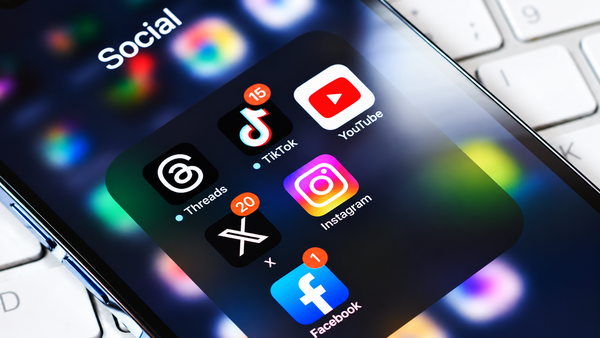
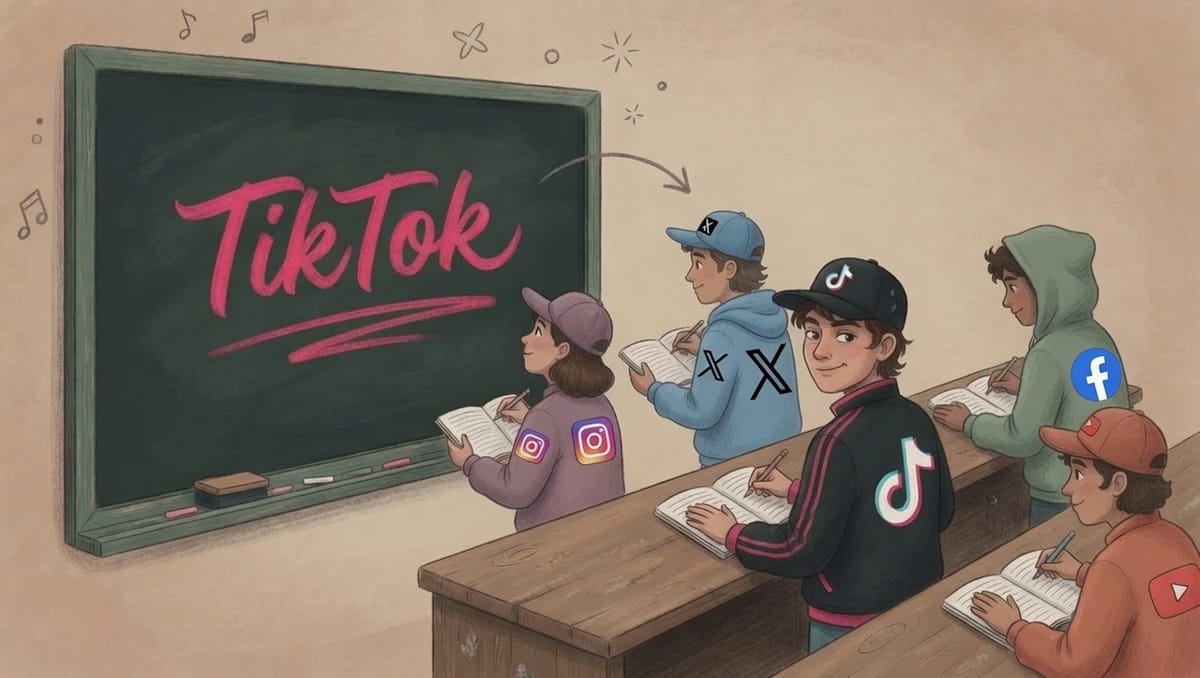
Last edition I covered what is happening, X launched a TikTok-style React with Video feature, Instagram built Reels, YouTube launched Shorts, LinkedIn built a video feed. Every platform copying every other platform, faster than ever before.
But I did not answer the deeper question. The one that actually matters if you want to understand how these platforms work and how to use that knowledge to your advantage as a creator or entrepreneur.
Why are they really doing this?
The honest answer is not "because TikTok is popular." It is because billions of dollars in advertising revenue depend on one thing above everything else: keeping you on the platform for as long as possible. And right now, the features that do that most effectively all look similar.
Advertisement

Attention is the product. Time is the currency.
Before anything else, it helps to understand the fundamental business model of every major social media platform.
None of them charge you to use the product. Instagram is free. TikTok is free. X is free. YouTube is free. But each of these companies generates billions of dollars in annual revenue and almost all of it comes from selling advertising.
Advertisers pay for eyeballs. The more time users spend on a platform, the more ads they see, and the more money the platform makes. It is that simple. Every feature decision, every algorithm change, every product update on every major social media platform ultimately traces back to one question: will this keep users on the platform longer?
The opportunity for platforms has shifted from reaching new users to capturing more time, attention, and transactions from existing users, which is why social commerce and short-form video are the two fastest-growing categories in every platform's roadmap right now.
That is not an accident. It is a business strategy. And it explains everything.
Why short-form video became the feature every platform had to copy
When TikTok introduced its algorithmically driven short-form video feed in Western markets around 2019 and 2020, something remarkable happened. Users started spending significantly more time on the app than on any competing platform. The format was almost impossible to stop scrolling through, every video was short enough to justify watching one more, and the algorithm got better at predicting what you wanted to watch faster than any platform had managed before.
US social media users now spend 61% of their time on social networks watching video content, up from just 33% in 2019, before TikTok became dominant in the US market.
Advertisement
 Reid HoffmanCofounder of LinkedIn, Partner at Greylock
Every other platform looked at those numbers and faced an existential question: if users are spending that much time on TikTok because of short-form video, how much time are they not spending on us?
The answer was uncomfortable. And the response was immediate.
Instagram launched Reels. YouTube launched Shorts. Facebook restructured its entire video experience. LinkedIn built a vertical video feed. X launched React with Video. Every single one of these moves was driven by the same calculation: short-form video keeps users on platform longer, longer time on platform means more ads served, more ads served means more revenue.
This is not imitation for its own sake. This is survival mathematics.
The numbers that drive every feature decision
To understand why platforms copy features so aggressively, you need to see the revenue stakes involved.
Instagram's Reels now account for the majority of time spent on the app, and shopping features have matured into a meaningful revenue channel for both brands and creators. Instagram did not build Reels because it wanted to be more like TikTok. It built Reels because without it, users were spending those hours on TikTok instead and every hour a user spends on TikTok is an hour they are not seeing Instagram ads.
Social media now directly influences purchasing decisions at scale. 76% of all users say social media has influenced some percentage of their purchases over the past six months. Platforms that capture that purchase intent, through short-form video, in-app shopping, and reaction content, are the ones that can charge advertisers premium rates.
Social commerce is accelerating, with in-app purchasing moving from experiment to default on most major platforms. This is the next frontier of the feature copying war. It is no longer just about keeping users on platform, it is about keeping the entire purchase journey inside the platform, so the platform can take a cut of every transaction.
TikTok Shop proved this model works. Every other platform is now building their version of it. Not because TikTok invented shopping, but because in-app commerce dramatically increases the revenue a platform can generate per user per hour. It turns passive scrollers into active buyers — without ever leaving the app.
The creator economy is central to this strategy
Here is the part that most business coverage of this topic misses entirely and it is the part most relevant to you as a creator or entrepreneur.
Platforms do not just copy features to retain users. They copy features to attract and retain creators. And creators are arguably more valuable to a platform than regular users.
A creator produces content that keeps thousands of other users on the platform. One popular creator with an engaged following of 50,000 people is essentially doing the platform's job for it, generating content, attracting viewers, keeping people scrolling for free. Or more accurately, for a share of ad revenue that is a fraction of what the platform makes from the attention that creator generates.
Platforms are now paying creators directly, making influencers more selective about brand deals and pushing creator rates up. This is a direct response to the creator migration problem. When TikTok started paying creators through its Creator Fund and later its monetization programs, it created a financial incentive for creators to prioritize TikTok over other platforms. Every other platform responded by building their own creator payment programs, YouTube's Partner Program expansion, Instagram's bonus programs, X's revenue sharing for verified creators.
The feature copying and the creator payment programs are two sides of the same strategy. Platforms need creators to produce content. Creators go where the features and the money are best. So platforms copy the features that attract creators, and pay creators to stay.
For you as a creator, this dynamic is genuinely in your favor, if you know how to use it.
What this means for your strategy as a creator or entrepreneur
Understanding the business logic behind why platforms copy features changes how you should think about your content strategy in three specific ways.
New features are a business opportunity, not a distraction. Every time a platform launches a copied feature, it is essentially announcing: we are subsidizing early adoption of this format to drive engagement data. The algorithmic boost that comes with new feature launches is real, it is significant, and it is temporary. Instagram's algorithm now prioritizes Reels distribution so aggressively that brands posting fewer than four Reels per week see 23% lower overall account reach. That kind of algorithmic weighting does not happen by accident — it is a deliberate business decision to accelerate adoption. Creators who move first capture that boost. Those who wait lose it permanently.
Platforms are competing for your content as much as your attention. You are not just a user. If you create content, you are a supplier. Platforms need what you produce. That gives you more leverage than most creators realize. When a platform launches a new feature with a creator incentive attached, a bonus program, increased reach, priority placement, that is the platform competing for your content. Treat it like the business negotiation it actually is.
The formats converging across platforms are the ones worth mastering. Short-form video. Reaction content. In-app shopping. Serialized episodic content. Serialized content is outperforming one-off posts, episodes build trust, anticipation, and keep audiences coming back. These formats are being copied by every platform simultaneously because the data shows they work better than everything else at retaining attention and driving revenue. When every platform independently arrives at the same conclusion about a format, that is about as close to a guaranteed signal as the creator economy offers. Master these formats once and you are equipped for every platform that copies them, which, based on current trends, will eventually be all of them.
The uncomfortable truth platforms would rather you did not know
There is one more dimension to this worth naming directly, because understanding it protects you as a creator building a business on these platforms.
Platforms are designed to limit unpaid reach in order to monetize the audience they helped you build. The features platforms copy and promote aggressively today will eventually be throttled tomorrow — once adoption is high enough that the platform can start charging for the reach it previously gave away for free.
This happened with Facebook Pages. It happened with Instagram's organic reach. It is beginning to happen with Reels. It will happen with every new feature on every platform, on a predictable cycle: launch with generous organic reach, drive adoption, reduce organic reach once creators are dependent on the format, monetize through paid promotion.
This is not cynicism. It is the business model. And knowing it means you can plan around it, by treating social media platforms as discovery engines that feed audiences into spaces you own and control, rather than as the destination itself.
One last thing
Every feature a social media platform copies from a competitor is a data-driven business decision, not a creative one. Platforms copy what works because what works keeps users on platform longer, attracts more creators, drives more ad revenue, and increasingly captures more commerce. The "TikTokification" of social media is not a trend. It is the entire industry converging on the formats that generate the most revenue per user per hour.
For creators and entrepreneurs, this is useful information. The features being copied are the ones worth learning. The platforms launching new features are the ones offering free reach right now. And the business logic driving all of it - attention, time, revenue - is the same logic you can apply to your own content strategy.
Understand the game the platforms are playing. Then decide how you want to play it.