

Why social media platforms are copying each other's features and what it means for creators
X just launched a TikTok-style React with Video feature. Here's why every social media platform is copying each other and how creators and entrepreneurs can use it to grow faster.

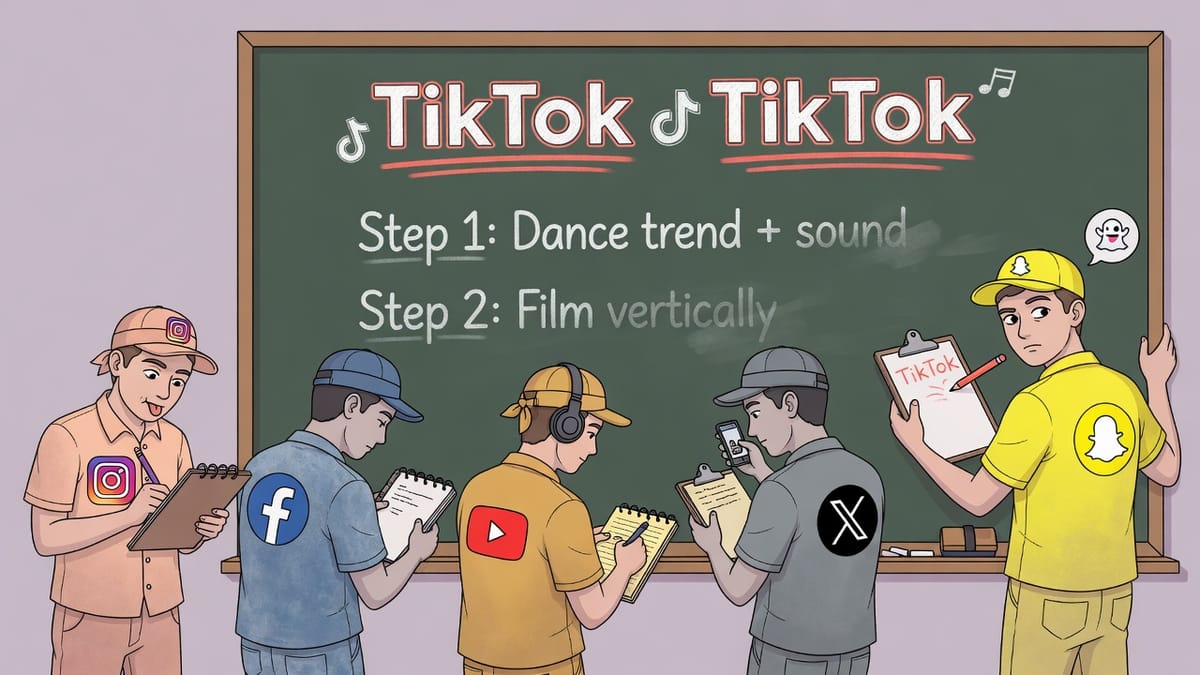
Every platform is borrowing from its competitors right now. X just launched a TikTok feature. Instagram did it before that. YouTube followed. LinkedIn joined in. This is not a coincidence, it is a deliberate strategy. And once you understand why social media platforms are copying each other's features, you will use every platform smarter.
What Just Happened on X
On June 2, 2026, X launched a brand new feature called "React with Video." The feature lets users record a video as a response to an existing post, with the reaction appearing alongside the original content in either split-screen or superimposed format.
Users can choose from picture-in-picture, split-screen, and green-screen layouts, all built directly into the app, with no third-party editing software required.
If this sounds familiar, it should. TikTok introduced this exact format back in 2021, and it quickly became one of the platform's most popular and widely used features.
X's head of product, Nikita Bier, framed it this way at launch: "Commentary is one of the most important pillars of X. And sometimes the best way to share your thoughts is with video."
What he left unsaid, but the entire internet noticed, is that TikTok built this format five years ago.
Advertisement
 Nat Friedman
X is not the only one. Every platform is doing this.
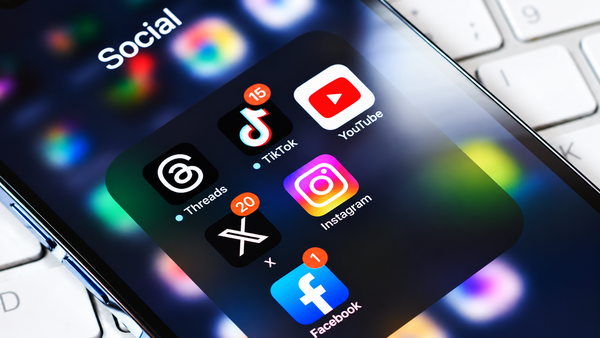
X borrowing from TikTok is not an isolated incident. Across every major social media platform, the same pattern keeps repeating: a feature succeeds on one platform, and every competitor builds a version of it within months.
Here is what has been happening across the board:
Instagram copied TikTok's short-form video and Reels became its biggest feature. When TikTok began dominating in 2020, Instagram launched Reels almost immediately in direct response. Today, Reels drives more engagement on Instagram than any other format. Instagram is now also testing a "Short Drama" feature to tap into the episodic mini-drama trend that TikTok popularized, short serialized stories designed to end on cliffhangers and keep viewers coming back for more. Instagram is also reportedly testing a feature called "Swap," which lets users replace the text on another person's Reel with their own custom text — another format that originated on TikTok.
YouTube launched Shorts and then kept expanding its capabilities. YouTube Shorts are no longer limited to 60 seconds, as of late 2024, videos can run up to 3 minutes, significantly expanding the format. YouTube has also moved into social commerce, directly targeting TikTok Shop. YouTube is now building in-app shopping for Shorts, a clear competitive play for TikTok Shop's fast-growing market share.
LinkedIn built a TikTok-style video feed for professionals. LinkedIn launched a short-form vertical video tab and actively encouraged users to cross-post video content from other platforms to help build it out. A professional networking platform now has a scrollable video feed. A year ago that would have seemed unlikely.
Facebook unified its video experience to mirror TikTok. Facebook launched a singular video feed combining Reels, long-form videos, and live content into one continuous experience, directly modeled on TikTok's all-in-one format.
This pattern now has a widely recognized name: the "TikTokification" of social media. And in 2026, it is accelerating faster than ever.
Advertisment
 Reid HoffmanCofounder of LinkedIn, Partner at Greylock
Why social media platforms copy each other's features
This is the part most creators overlook and understanding it changes how you think about every new feature announcement you see.
The reason platforms copy each other is not a lack of creativity. It is competitive survival.
When a feature drives engagement on one platform, when it keeps users scrolling longer, creates more content, and generates more ad revenue, every competing platform faces the same pressure: build it or risk losing users to the platform that already has it.
US social media users now spend 61% of their time on social networks watching video content, up from just 33% in 2019, before TikTok became popular in the US market. Every platform looked at those numbers and reached the same conclusion: video is where attention lives, and platforms that do not offer it will lose ground to those that do.
There is also a risk management dimension. When TikTok faced a potential US ban in early 2025, Instagram, YouTube, and X all accelerated their TikTok-inspired feature rollouts simultaneously, positioning themselves as ready alternatives for TikTok's creators and audience. The uncertainty created a window, and every platform moved through it at the same time.
The underlying logic is straightforward: the reputational cost of being seen as unoriginal is far lower than the financial cost of losing users and ad revenue to a competitor who already built the feature.
How users actually react to copied features
Not positively, at least not at first.
When Instagram launched Reels in 2020, the reaction from existing users was almost entirely negative. The feature was widely criticized as a direct TikTok clone, and users complained it was being pushed aggressively at the expense of the photo-sharing experience that made Instagram popular in the first place. Years later, Reels is the most-watched format on Instagram and the primary driver of organic reach for creators on the platform.
The same cycle plays out every time a major platform copies a feature. Initial resistance, followed by gradual adoption, followed by the feature becoming so embedded in the platform experience that users forget it was ever controversial.
With X's React with Video, early reactions have been genuinely mixed. Creators who build their personal brands through commentary, journalists, opinion makers, political commentators, and niche educators are enthusiastic. X believes the feature will give creators richer feedback from their audiences in the form of facial expressions and tone, something that text-based replies simply cannot deliver.
More skeptical voices point to a broader concern. Some analysts argue that these changes reflect ongoing pressure to mimic successful formats rather than innovate independently, and that the real test will be whether these tools genuinely improve daily interactions or simply contribute to further fragmentation of the feed.
Both reactions are valid. And the honest answer is that the outcome depends entirely on how the creator community chooses to use the feature, not on the feature itself.
What this means for creators and entrepreneurs
Here is the practical insight that most coverage of this topic misses entirely.
When a social media platform launches a copied feature, it almost always over-incentivizes it algorithmically at launch. The platform needs adoption data. It needs to prove the feature works. So it boosts the new format in the algorithm, promotes it to wider audiences, and gives early adopters disproportionate organic reach that would cost significant money in paid advertising later.
This is exactly what happened with Instagram Reels. Creators who posted Reels in the first few months after launch received organic reach that is essentially impossible to replicate today. The same pattern played out with YouTube Shorts, LinkedIn video, and TikTok itself in its early growth phase in Western markets.
X's React with Video feature is specifically targeting creators, influencers, journalists, and commentators. By reducing the need for editing and production, X expects more users to create original video content rather than simply reposting existing material. That shift in behavior is exactly what the algorithm will reward in the coming weeks.
If you are an active creator on X, the early mover window on this feature is open right now. The feature launched on June 2, 2026. The algorithm is incentivizing it heavily at this moment. You do not need a professional setup or hours of post-production, just your phone, a genuine reaction to something relevant in your niche, and the willingness to press record.
More broadly, the pattern of platforms copying each other's features carries a consistent lesson for creators: the features that get copied are the ones that work. When every platform starts building the same tool independently, that is not a sign of a passing trend, it is market confirmation that the behavior the feature enables is something audiences genuinely want and will continue to engage with.
Short-form video. Reaction content. In-app shopping. These formats are not experiments anymore. They are the established infrastructure of social media engagement in 2026. Creators who treat every new feature rollout as an early opportunity, rather than waiting to see whether it sticks, consistently build faster and reach further than those who wait.
Three things to do this Week
1. Try X's React with Video today. Pick a post in your niche that has a clear angle you can respond to. Keep the video short and genuine. Do not overthink production quality — the feature is brand new, and rough edges are expected and even relatable right now. The algorithmic boost is live.
2. Check what features your main platform has added in the last 30 days. New features almost always come with an early algorithmic boost. Most creators ignore new features until they are mainstream, which is exactly when the boost disappears. Look at what is new, experiment with it this week, and get ahead of the curve before everyone else catches on.
3. Stop thinking of platforms as separate content strategies. The formats that drive engagement are converging across platforms. A reaction video that performs on TikTok will perform on X. A short tutorial that works on YouTube Shorts will work on Instagram Reels. Build your content once, adapt it for each platform's style, and let the algorithms distribute it. That is how one piece of content becomes ten.
The Bottom Line on Social Media Platforms Copying Features in 2026
Every major social media platform, X, Instagram, YouTube, LinkedIn, and Facebook, is borrowing features from its competitors right now, and the pace of that borrowing is accelerating. The driver is not imitation for its own sake but competitive survival in a landscape where video engagement dominates and user attention is the scarcest resource.
For creators and entrepreneurs, this trend is not something to be cynical about. It is one of the most reliable growth signals available. When platforms copy a feature, they reward early adopters. When every platform copies the same feature, the behavior it enables has become a permanent part of how audiences consume content online.
The creators who pay attention to these shifts and move quickly when new features launch, are the ones building durable, platform-resilient audiences.