


Your audience is moving into smaller rooms: Here is what X and Threads just told creators
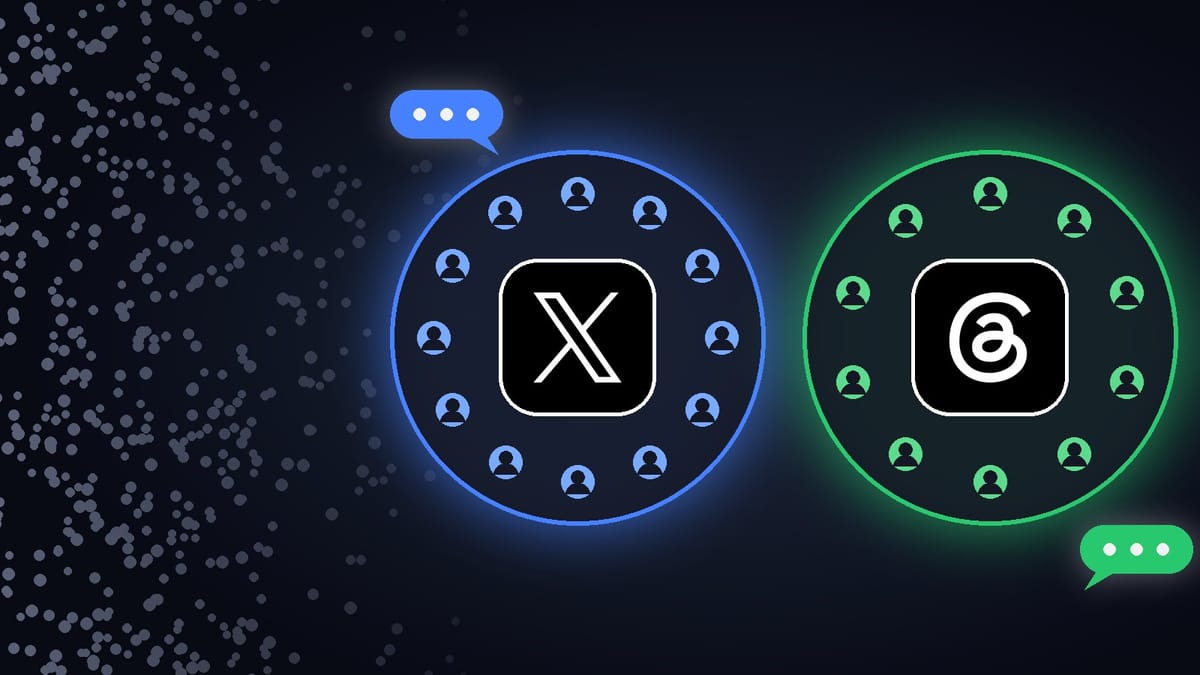
X opened subscriber-only group chats for creators. A day later, Threads began testing Threads Friends, private posts for up to 50 people.
New product: I just published my first digital guide — free local AI images and video, step by step. $19.
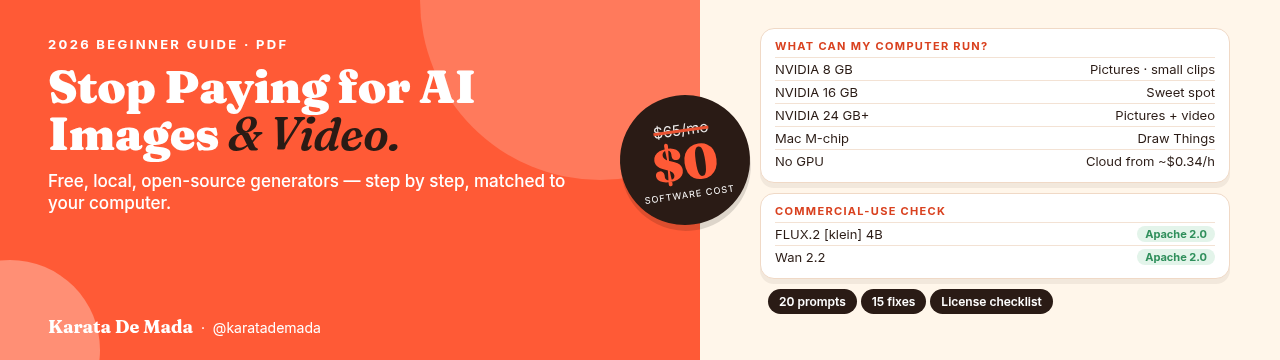
Stop Paying for AI Images & Video: The 2026 Guide
A step-by-step PDF that shows you how to make AI images and videos for free on your own computer, or on a GPU you rent for cents an hour. Matched to your hardware, with commercial-use notes for every model.
The public feed is no longer the only place where your audience lives.
In the space of two days, two of the platforms you probably use most made the same move. On October 28, 2026, X introduced subscriber-only group chats for creators. On October 29, 2026, Threads announced a test called Threads Friends, which lets people share posts with a private list of up to 50 people instead of everyone who follows them.
Different companies. Different products. Same direction.
This is not a privacy update. It is not a minor messaging feature tucked inside a settings menu. It is two platforms telling you, in public, that the most valuable part of your audience is no longer the largest part. It is the smallest one. The few hundred people who would actually notice if you stopped posting.
This edition breaks down what each feature actually is, who can use it today, what it is not, why it matters for how you think about growth, and what to do this week whether you have five subscribers or five thousand.
What X just launched
Before getting into strategy, it is worth making sure you understand exactly what X released, because the details matter more than the headline.
On October 28, the official X Creators account announced Subscriber-only Group Chats. The description was simple: chat in real time with your most loyal supporters and build a community that keeps them subscribed. The feature lives inside Creator Studio, under Subscriptions, and it runs on X Chat, the platform's messaging system.
The mechanics are straightforward. When you create the chat, your current subscribers join automatically. New subscribers do not appear instantly; you open X Chat to let them in, and X notifies you when someone is waiting. When a subscriber cancels, they are removed automatically. A chat can currently hold up to 1,000 members, and if it is full, the next person in line gets the next spot when someone leaves.
There is one more detail that deserves attention. You can copy the chat's invite link from the chat settings and share it in a post. Anyone who is not subscribed yet is prompted to subscribe in order to join. That turns the chat itself into a reason to subscribe, not just a perk for people who already did.
Now the limit. The feature is in beta for creators with 800 or fewer subscribers. Allegra Jacchia, who leads creator product at X, wrote on launch day that the team is hoping to open it up to everyone soon. No date was given.
That limit is unusual, and it is worth pausing on. Many platforms test new creator tools with their biggest accounts first. X did the opposite. It started with small creators. X has not explained why, but the logic is easy to see. A chat with 1,000 members is still a conversation. A chat with 40,000 members is a broadcast channel with a comment section.
What Threads is testing, and what it is not
The Threads announcement came one day later, and it points in the same direction from a different angle.
Threads Friends lets you build a list of up to 50 people and publish posts only to them. Those posts do not appear publicly anywhere else on the platform. Social Media Today, which reported the test on October 29, compared it directly to Instagram's Close Friends feature, and that comparison is the easiest way to understand it. If you already use Close Friends for Stories, you already understand the idea.
According to Engadget, a Meta spokesperson said the app will automatically suggest followers you frequently engage with when you build your first list, and you can edit those suggestions. Once the list exists, a green bubble at the top of the feed shows posts your friends have shared with you in the past 24 hours.
Threads also explained one detail that changes how this feels in practice. People you add will see Threads Friends on your posts, so they know they are on your list. And if someone on your list likes or replies, others on the list can see their username and how they interacted. In other words, this is not a private message. It is a small room where everyone can see who else is in it.
The test is limited to Ireland, Italy and Japan. Anyone in the world can be added to a list, but only people in those three countries can create one for now. Meta has not said if or when it will expand.
It is also worth being clear about what this feature is not. It is not a monetization tool. Nobody pays to be on your Threads Friends list. It is not a replacement for public posting, because the main feed is still where new people find you. And it is not entirely new. Engadget pointed out that Twitter launched a similar feature called Circle in 2022, which let users post to a group of up to 150 people. The company shut it down about a year later.
That history matters. Private sharing features do not automatically succeed. They succeed when people have a clear reason to use them.
The third update that completes the picture
There was a quieter X change in the same week that looks unrelated at first, but it belongs in this story.
X added a way to reshare another person's photo with credit. As X described it, you long press a photo, tap Post photo, the original author gets credit, and you both earn from Original Content Rewards. Social Media Today reported on October 28 that until now, impressions on posts with duplicated images had not been eligible for the program.
As a reminder, Original Content Rewards is the program X announced in August to replace its old revenue sharing, which ended on September 7. To qualify, you need an X Premium subscription, at least 500 verified followers, and at least 500,000 Home Timeline impressions from verified users in the previous 90 days. Payouts are issued every two weeks.
Why does this belong next to group chats and Threads Friends? Because together they describe two separate jobs.
The public feed is being tuned for reach and attribution. Who made this. Who shared it. Who should get paid for the attention it creates. That is the top of your funnel.
The small rooms are being built for retention. Who stays. Who keeps paying. Who feels like they are part of something. That is the bottom of your funnel.
For years, creators were told to do everything in one place: post publicly, chase reach, and hope some of those viewers would turn into loyal fans on their own. The platforms are now building separate tools for each stage. The creators who understand the difference will use both on purpose.
Why this matters specifically for creators
It is easy to read these announcements as social features for friends and families. That would be a mistake.
Think about what actually keeps a creator business alive. It is rarely a single viral post. A viral post brings strangers. Most of them never come back. What keeps the lights on is a smaller group of people who return every week, who reply, who buy, who renew their subscription, and who tell other people about you.
Instagram has been saying a version of this for a while. In a Reel in July 2024, Adam Mosseri, the head of Instagram, said that one of the most important signals Instagram uses in ranking is sends per reach. Out of all the people who saw your video or photo, how many of them sent it to a friend in a direct message. He added that Instagram wants to be a place where people discover things they want to tell their friends about.
That is not a small detail. That is the head of one of the largest platforms in the world telling you that private sharing feeds public reach. The conversation that happens in a small room is one of the things that decides how far your post travels in the big one.
Now look at X and Threads in that light. X is giving paying fans a room of their own. Threads is giving everyone a way to talk to their closest 50 people without performing for the whole internet. Both are betting that intimacy keeps people on the platform longer than broadcasting does.
There is also a simple business reason. On X, the subscriber chat is designed explicitly to keep subscribers subscribed. That is the language X itself used. A subscription that comes with a real conversation is harder to cancel than a subscription that comes with a badge and the occasional exclusive post. For a creator, a lower cancellation rate is often worth more than a burst of new followers.
What this means for creators at different stages
The right move depends on where you are, so it is worth separating this by stage.
If you are just starting out and do not have subscriptions enabled on X, none of this is urgent for you yet. Your job is still to be found. But you should start noticing who shows up repeatedly in your replies. Those names are your future small room. Write them down. The habit of knowing your first 50 real fans by name is more valuable than any feature.
If you have subscriptions on X and 800 or fewer subscribers, this beta is built for you. You are exactly the creator X chose to test it with. A chat with 30 or 80 people is manageable, and it can feel genuinely personal. You can answer every message. You can ask what they want next. You can share drafts before they go public. That kind of access is something a large creator cannot offer, and it is the clearest advantage of being small.
If you have more than 800 subscribers, you cannot use it yet, but you should plan for it. When access opens, the worst thing you can do is create a chat, post a welcome message, and disappear. An empty or silent room makes a subscription feel less valuable, not more. Decide in advance what the chat will be for, how often you will show up, and what members get there that nobody else gets.
If you are in Ireland, Italy or Japan and use Threads, you may already have access to Threads Friends. Treat it as a test kitchen. Share early ideas, unfinished thoughts and behind-the-scenes posts with your closest supporters, then publish the versions that resonate to everyone.
And if you mainly grow on Instagram, the lesson is already in front of you. Close Friends exists. Broadcast channels exist. Sends per reach is a ranking signal. The small rooms are already part of how Instagram works. X and Threads are simply catching up.
What every creator should understand
X is now running two monetization systems that reward very different behavior, and it helps to see them side by side.
Original Content Rewards pays for attention from paying users in the public Home Timeline. It rewards reach, originality and consistency. It has hard thresholds, and the payout depends on a formula X has not published in detail.
Creator Subscriptions pay for loyalty. A subscriber does not pay you because one post went viral. They pay because they want more of you, every month. The new group chat is one of the clearest tools X has built to protect that monthly relationship.
Most creators on X focus almost entirely on the first system because it is the one people screenshot and talk about. But the first system can change at any time, and it already has once this year. The second system is built on people who chose you. That is a much more stable foundation.
None of these updates happened in isolation. X is paying for original posts in public and giving creators private rooms for their paying fans. Threads is testing private posts for close circles. Instagram ranks content partly on how often it gets sent privately. Every major platform is quietly separating the crowd from the community.
What creators should do right now
First, find out what you have access to. If you have X subscriptions turned on, open Creator Studio, go to Subscriptions, and see whether the group chat option appears. If you have 800 or fewer subscribers, it should be available in beta. If you are in one of the three Threads test countries, check whether Threads Friends shows up when you create a post.
Second, if you can create an X subscriber chat, do not launch it cold. Write a short welcome message that explains what the chat is for, how often you will be there, and what members will get. One clear promise is better than five vague ones. For example, a weekly question you answer personally, or early access to every major post before it goes public.
Third, use the invite link on purpose. X lets you share the chat link in a public post, and anyone who is not subscribed is prompted to subscribe to join. That means the chat can become the reason people subscribe. Write one post this week that describes what happens inside the room, without exaggerating, and attach the link.
Fourth, make one thing private before you make it public. Whether it is an X chat, Threads Friends, or Instagram Close Friends, share one draft, one idea or one behind-the-scenes moment with your smallest group first. Watch what they react to. Then publish the strongest version to everyone. Your closest fans become your test audience.
Fifth, create one post a week that is designed to be sent, not just liked. Mosseri's own examples were a reel so funny you want to send it to your brother or sister, or a highlight you want to send to another fan. For creators, that can be a useful checklist, a clear explanation or a moment of recognition. If a follower would forward it to one specific person, you are making the right kind of post.
Sixth, keep your expectations honest. Both features are early. X has not given a date for opening chats to every creator. Threads has not said if Threads Friends will ever leave its three test countries. And Twitter's Circle feature is a reminder that private sharing tools can disappear. Build the relationship, not a dependence on one feature.
Pick the one update most relevant to your account, make one practical change this week, and build from there.
The crowd decides how many people see you. The room decides how many people stay. The platforms have started building for both, and the creators who win the next year will be the ones who know which one they are talking to.