

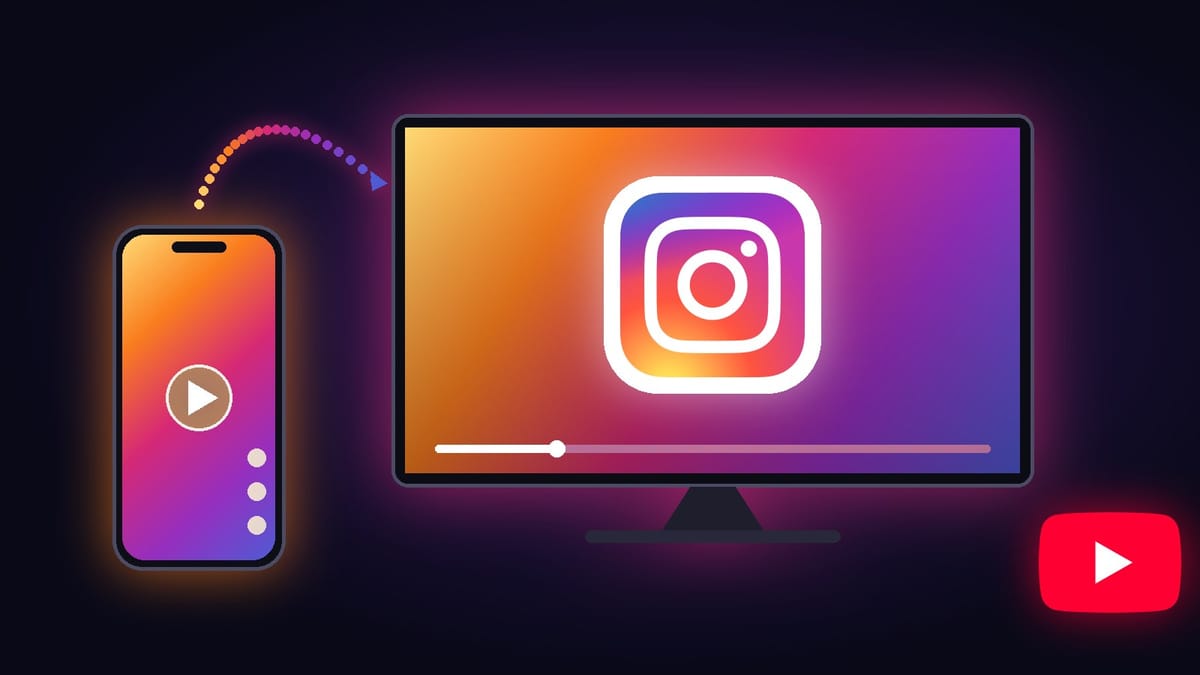
Instagram now wants your 90-minute videos
Every major platform is now telling you the same thing in different words: build a library, not a feed.
New product: I just published my new digital guide: free local AI images and video, step by step. $19.
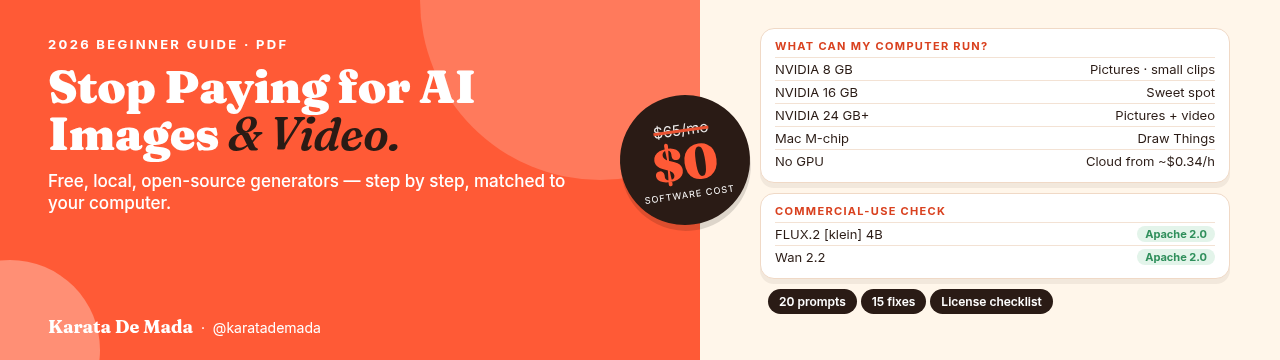
Stop Paying for AI Images & Video: The 2026 Guide
A step-by-step PDF that shows you how to make AI images and videos for free on your own computer, or on a GPU you rent for cents an hour. Matched to your hardware, with commercial-use notes for every model.
Since Reels launched in 2020, Instagram has been teaching creators to think short. The format started with a 15-second limit and has since grown to 20 minutes. This week, Instagram asked creators to think in feature length.
On October 26, 2026, Instagram head Adam Mosseri and VP of Product Tessa Lyons announced a new video format called Features in a video posted on the platform. Features are horizontal videos of up to 90 minutes, built for podcasts, vlogs, interviews and episodes. A small test with select U.S. creators started the same day, after earlier testing with creators in Brazil.
The most revealing line in the announcement did not come from the product. It came from Mosseri himself: "For a long time, I have been against doing long-form video on Instagram."
This is not a new upload limit. It is Instagram admitting that the most valuable hours of video watching, the ones that happen on a couch in front of a television, belong to YouTube, and that it intends to compete for them.
But there is a gap at the center of this launch that every creator noticed within minutes. Instagram has not announced any ad revenue share for these videos. This edition breaks down what Features actually is, what it is not, why Instagram changed its mind, how it compares to what YouTube is doing this very week, what it means for creators at different stages, and what you should do right now.
What Features actually is, in plain language
Before getting into strategy, it is worth making sure the basics are clear, because several different products were announced at once and they are easy to confuse.
Features is the long-form format itself. According to Variety, Instagram is testing different video length limits, including up to 90 minutes, for horizontal videos such as podcasts, vlogs, interviews and episodes. For context, Instagram's Help Center says creators can record and edit Reels of up to 20 minutes, which matches what Fast Company reported as the previous vertical maximum.
Clips as Reels is the bridge. Creators in the test can link up to eight Reels to one long video. A viewer sees a short clip in the Reels feed, taps, and continues straight into the full episode without leaving the app. Lyons described it to The Hollywood Reporter this way: "you see a clip of a podcast that you love, you can just click and continue watching or watch the full video."
Series is a dedicated home on a creator profile for episodic Reels, aimed at the rise of microdramas and multi-part stories. Instagram has been experimenting with it for months and plans to test it in more countries.
Then there is distribution. The Hollywood Reporter says Features will also be recommended on the Explore page and in other areas of the app, and that Instagram plans to expand the test to tens of thousands of creators in the U.S. Instagram for TV, which launched last year on Amazon Fire TV and has since reached Google TV and Samsung TVs, is now available on Apple TV in the U.S. as well. A feature that lets you use your phone as a remote control is coming soon. Instagram is also testing Live videos that reach people who do not already follow you, through the Reels tab, starting in Indonesia and Brazil.
The early test creators named by The Hollywood Reporter include podcast host and Skims co-founder Emma Grede, beauty and fashion creator Monet McMichael, Preston Rakovsky, who interviews New Yorkers about love and relationships, and football creator Donald De La Haye.
Put simply, Instagram is building a full pipeline. Short clips for discovery. Long videos for depth. Series for return visits. A TV app for the living room. That is the same architecture YouTube has spent years perfecting.
What Features is not, and the question everyone asked first
It is not a payout program.
When the announcement went live, 9to5Google reported that the comments filled up with the same question: why should a creator post long-form video on Instagram when YouTube pays for the same work?
Instagram's answer, so far, is careful. A Meta spokesperson told TechCrunch that it is too early to share a long-term monetization model, and that the company is exploring "ways for creators to earn from brands, fans, and Instagram, including performance-based incentives." An Instagram representative told Variety that the platform is providing funding for longer content directly with some creators right now. Lyons told The Hollywood Reporter that Instagram is working on "a few different deals" with early creators.
That is not a no. But it is also not a revenue share, and you should plan as if one does not exist until Instagram announces one with real terms.
What does exist is clear. According to The Hollywood Reporter, existing ad deals carry over into Features. If you already sell sponsorship placements inside your podcast or your vlog, you can bring that content to Instagram with those placements intact. Instagram also says it will work with creators who do not yet have placements to help them find deals. And there is currently no exclusivity. You can publish the same long video on Instagram and on YouTube.
Mosseri has been unusually honest about why Instagram does not pay per view. In a conversation on the Colin and Samir Show, quoted by TechCrunch, he described three ways to get paid: by the platform, by a fan, or by a brand. On Instagram, he said, creators primarily get paid by brands. He described the performance-based program Instagram does have as small, and said of it that "we spend more money than we make back by a long shot."
That sentence tells you that Instagram does not see direct payouts as the engine of its creator economy. Brands are the engine. Features is designed to give brands, and the creators they pay, a bigger and longer canvas.
Why Instagram changed its mind about long video
Instagram has tried this before. In 2018, it launched IGTV, a separate app for long-form video. It never caught on, and Instagram shut it down in 2022, as Social Media Today reminded readers in its coverage.
So why now? Three things have changed.
The first is the television. Lyons explained in the announcement, as quoted by Tubefilter, that people love to watch Reels together in their living rooms, that Instagram built a TV version of Reels, and that doing it well requires more than short-form video. She was direct about where she expects long videos to be watched: "We think the best viewing experience for longform horizontal content is on a big, horizontal screen." YouTube says people watch over a billion hours of its content on TV every day. That is the prize.
The second is what creators were already doing. According to Fast Company, Mosseri explained that his team noticed creators using Reels to promote clips of long videos posted somewhere else. Variety and other coverage of the announcement video make the same point: creators were already clipping long episodes to drive discovery on Reels. In practice, Instagram was acting as a trailer for other platforms. Features is an attempt to keep the full video, and the viewer, inside Instagram.
The third is the idea Mosseri kept returning to: making short and long video work together. His long-standing concern was that someone watching a single video for half an hour sees far fewer Reels, photos and carousels they might have sent to a friend, which means fewer shares. His new position is that the team is "trying to make it so that the short-form and the long-form video can be symbiotic." Clips as Reels is the mechanism. The clip spreads in DMs. The long video holds attention.
Lyons framed it as creative range rather than a format war: "Instagram is all about connecting people over creativity. And creativity is so much more than just short-form video or posting carousels." She also made clear that "Reels is still going to be a core part of Instagram."
One smaller detail tells you the direction is deliberate. According to Social Media Today and Net Influencer, citing creator economy expert Lia Haberman, Instagram began removing the older option to link Reels together on October 28. The loose, creator-made chains of Reels are going away. Structured Series and Features linked from Reels are what replace them.
The YouTube parallel every creator should understand
None of this happened in isolation. In the same week Instagram announced Features, YouTube made several moves of its own, and almost all of them are about money.
On the long-form side, the gap is still large. The Hollywood Reporter notes that YouTube offers qualified creators 55 percent of ad revenue on their videos. TechCrunch reports that YouTube said last year it had paid more than $100 billion to creators, artists and media companies over the previous four years. Instagram, by its own description, has no equivalent for Features today.
On October 27, Social Media Today reported that YouTube is testing a lower payout threshold. Instead of waiting for earnings to reach $100, a randomly selected group of creators in the U.S., India and Indonesia can receive payments once they reach $20, starting with October 2026 payments.
A few days earlier, on October 23, Tubefilter reported that YouTube is testing a Shorts Bonus Program, revealed by Creator Liaison Rene Ritchie, for select Partner Program creators in six regions, including the United States, the United Kingdom and Germany. The bonus is based on total valid engaged Shorts views for the month, and it rewards creators who keep a consistent Shorts schedule.
At the same time, YouTube is raising the bar to get in. In an August announcement, YouTube said that from February 1, 2027, new creators applying to its Partner Program for ads and Premium revenue will need 8,000 qualified watch hours in the last 365 days, or 20 million qualified Shorts views in the last 90 days. Creators already in the program are not affected.
Read those together and the competitive picture is clear. YouTube is making it easier to get paid once you are in, and harder to get in. Instagram is making it easier to reach a big audience with long video, but it is not yet paying for that video. Neither deal is right for every creator.
The other platforms are moving in the same direction. On October 27, Tubi and TikTok announced 12 creators who will develop 10 original long-form series for Tubi, which says it has 110 million monthly active users. And on X, as this newsletter covered on October 19, the platform is paying selected creators to post vertical video through its Video Kickstart Bonus, with enrollment closing on October 30. Short video is the front door everywhere. Long video, and especially long video on a television, is where the platforms are now competing for depth.
What this means for creators at different stages
If you are a beginner, Features is not your priority this month. The test is limited to selected creators in the U.S. and Brazil, and 9to5Google reported that the announcement video could not even be viewed outside the U.S. What matters for you is the structure Instagram is building. Clips lead to long videos. Long videos lead to series. Learn to think in that shape now, even if your long video today is only eight minutes and lives on YouTube.
If you are mid-stage, you are the creator Lyons was talking about when she described an opportunity to help people who do not yet have a business infrastructure behind them. You probably have an audience on Instagram and no sponsor relationships for long content. That is a real risk, because a 40-minute video with no brand attached earns nothing on Instagram today. It is also a real opening, because Instagram is actively looking for creators to prove the format works. Your job is to be ready with a repeatable long format and a clear audience, so that you are an easy yes if Instagram or a brand comes looking.
If you are established and already producing a video podcast, interviews or a vlog series, Features is close to free distribution. Your existing ad deals carry over and there is no exclusivity. The real cost is your time: clipping, publishing, replying to comments and tracking one more set of numbers. Treat Instagram as a second home for your full episodes and as a better trailer engine than it has ever been. Then go back to your sponsors and ask a simple question: would they pay more for placements that run on YouTube and Instagram at the same time?
If you are mainly on X, notice the pattern rather than the platform. X is paying for consistent vertical video. YouTube is paying for consistent Shorts. Instagram is building a path from short clips to long episodes. Every major platform is now telling you the same thing in different words: build a library, not a feed.
What creators should do right now
First, check whether you have access. Features is a small test with selected creators, so most accounts will not have it yet. If you are in the U.S. and Instagram offers it to you, do not wait to experiment.
Second, pick your best existing long video. A podcast episode, an interview, a tutorial, a vlog. Do not make something new for a format you cannot yet use. Choose something that already performed well elsewhere and decide which three to eight moments inside it would work as standalone Reels.
Third, practice the clip-to-long workflow now, even without Features. Every long video you publish on YouTube should produce several short clips with a strong first few seconds, a clear topic and a reason to watch the full version. That is exactly the behavior Clips as Reels is built to reward when it reaches you.
Fourth, if you have sponsors, update your rate card. Add an Instagram long-form placement as a line item and decide in advance whether it is included in your current price or sold as an extra. Brand money is the only confirmed way to earn from Features today, so make it easy for a brand to say yes.
Fifth, protect your YouTube position. If you are close to the Partner Program, the February 1, 2027 thresholds matter more than any Instagram test. Look at your watch hours and Shorts views now, and make sure Instagram experiments do not take time away from the platform that actually pays you per view.
Sixth, if you are not in the test, prepare one Series idea. A recurring segment, a weekly breakdown, a story told in parts. Episodic thinking works on every platform discussed in this edition, and it is the format Instagram is most clearly preparing to scale.
Instagram just gave creators 90 minutes of space and no revenue share to go with it. The creators who win this shift will not be the ones who upload the longest videos, but the ones who know exactly who is paying them, and why.