

55% of people are posting less: Here is the opportunity inside that number
People are posting less. Feeds are getting quieter. That sounds like a problem for creators. But it is actually the opposite.

A personal Project: Excited to share my new website, WHIF, What’s Happening in France, with you! Since most of you know I’m from France and many of you are English-speaking, I created WHIF to share what's happening in my country with a wider audience.
 WHIF
WHIF
A new study published in July 2026 found something that surprised a lot of people in the creator economy, even though it probably should not have.
55% of Americans and Europeans say they are posting less on social media now than they were five years ago. More than half of respondents said that maintaining an online presence feels like work. 47% have deleted a social media or messaging app because of the stress or anxiety it caused them. And 60% of Gen Z specifically, the generation that grew up on these platforms, say the pressure of keeping up a social presence has become genuinely painful.
Social media, the study concluded, has shifted from something people found fun and relaxing to something that feels dark, anxious, and exhausting for a growing portion of its users.
For creators, the instinct is to read this as a warning. If people are posting less, does that mean they are also checking in less? Does it mean audiences are shrinking? Does it mean the platforms are getting less valuable as a place to build?
The honest answer is more interesting than either a yes or a no. And for creators who understand what is actually happening, this shift is not a threat. It is one of the clearest opportunities the creator economy has produced in years.
What is actually happening and why
Before getting into what this means for creators, it is worth understanding what is driving the pullback, because the reason matters enormously for how you interpret it.
People are not leaving social media. They are changing how they use it.
The data makes a clear distinction between posting and consuming. People are posting less. But time spent on social media has not fallen in proportion with that. Meta reported that time spent on Facebook and Instagram has actually increased in recent years, primarily because of short-form video being inserted more aggressively into feeds. People are scrolling more and sharing less. They are consuming more and producing less.
The reasons people give for posting less tell the real story. Feeds have become overrun with content they do not care about. The algorithm means their actual friends and family rarely see what they post anyway. AI-generated content has made feeds feel less real and less worth contributing to. And the political tension and advertising saturation that has crept into every platform has made public sharing feel less safe and less rewarding than it used to.
In short: people are pulling back from public social media because the experience of sharing publicly has gotten worse, not because they have lost interest in consuming content from people they trust. They are moving from being participants in a public square to being audience members in a curated entertainment experience. And that shift has a very specific implication for the creators and entrepreneurs who are still showing up consistently.
The historical context that changes everything
Here is a number that reframes the entire story.
In 2019, Pew Research found that around 80% of all tweets on Twitter were published by just 10% of the app's users. That was not a new finding even then. The pattern that a small minority of users produce the overwhelming majority of public content has been consistent across every major social platform since the beginning of social media.
What the 2026 data is showing is not a new phenomenon. It is an acceleration of a pattern that has always been true. Most people have always been primarily consumers rather than creators on social media. The ratio of consumers to creators has always been heavily skewed. What is changing is that more people are consciously acknowledging that they prefer the consumer role and acting accordingly.
For the creators and entrepreneurs who are producing original content consistently, this context is important. You were always operating in a space where most people preferred to watch rather than create. The people pulling back from posting are not your competitors. They are your audience. And an audience that is retreating from producing their own content is an audience that is more available than ever to consume content from the people they trust.
Why this is an opportunity, not a threat
The math of the creator economy has always favored the minority who show up consistently. The 2026 pullback makes that math even more favorable.
When 55% of people are posting less, the feed does not get 55% emptier. What actually happens is more complicated. The space left by casual, infrequent posters does not stay empty. It gets filled by the people who are still showing up consistently, by the brands that are still spending on content, and by the AI-generated posts that platforms are simultaneously trying to suppress.
For a serious creator, this creates three distinct advantages.
The first advantage is reduced competition for organic reach. When casual posters pull back, the people who fill their space in the feed are the ones who are still consistently creating. An engaged, specific, consistent creator is better positioned to fill that space than a brand or an AI tool, because the audiences retreating from posting are retreating specifically because feeds feel less human and less genuine. They are looking for the opposite of what is replacing the casual posts they used to see. They are looking for exactly what a genuine creator offers.
The second advantage is increased trust value. Human-generated content is the number one priority for users in 2026. At the same time, 55% of users say they are more likely to trust brands that publish human-generated content. When half the general population is pulling back from social media because it feels fake, generic, and algorithmically driven, the creator who shows up with genuine expertise, genuine voice, and genuine perspective is not competing against the same noise they were competing against two years ago. They are standing out in a feed that is getting less human, not more.
The third advantage is audience concentration. The people who are still actively engaged on social platforms in 2026 are more likely to be the highly engaged, intentional users who are there specifically for content they care about. The passive scrollers who followed everyone and engaged with nothing are the ones pulling back most. The people who remain are the ones who are actively seeking out content that is worth their time. That is a better audience to build with, even if it is a smaller one.
What the platforms are doing about it
The platforms themselves are well aware of the posting pullback and are responding to it in ways that creators need to understand.
Meta has reported that time spent on Facebook and Instagram has increased despite the posting decline, primarily because of video content being inserted more aggressively into feeds. This tells you something important about Meta's strategy. It is not trying to reverse the trend of people posting less. It is trying to fill the space left by that pullback with video content, both from creators and from its own algorithmic recommendations.
For creators on Instagram and Facebook, this means that the platform's current priorities are strongly aligned with video content and creator content specifically. Meta is actively trying to fill the gap left by casual users pulling back. Original creator content is one of the primary tools it is using to do that. The algorithmic signals that Instagram and Facebook send to the kinds of content they want to see more of are pointing directly at genuine creator content rather than casual personal sharing.
TikTok is the one platform where the pullback in casual posting has not translated into a decline in engagement. TikTok's engagement rate grew 49% year over year, the highest of any social platform. The reason is that TikTok was always more of an entertainment platform than a social sharing platform. People came to TikTok to watch, not primarily to share what was happening in their lives. The pullback in personal social sharing does not affect TikTok the way it affects platforms that were built around the social graph.
LinkedIn has emerged as a hub for B2B creators specifically because the pullback in casual personal posting has left more space for professional content that is genuinely useful. The people who remain active on LinkedIn are there for professional reasons, which makes them a high-quality audience for creators whose content serves professional needs.
What this means specifically on X
The posting pullback story is particularly interesting on X because the platform was built specifically around the idea of public, real-time sharing. The decline in casual public posting hits X in a more direct way than it hits entertainment-first platforms like TikTok.
But X has a characteristic that makes it uniquely resilient to the casual posting pullback: it has always been a platform where a small number of accounts produced the vast majority of content. The 80% of posts from 10% of users finding from 2019 was always particularly pronounced on X. The departure of casual posters from X does not fundamentally change the platform's content dynamics the way it might on Instagram, where personal sharing from friends was a more central part of the user experience.
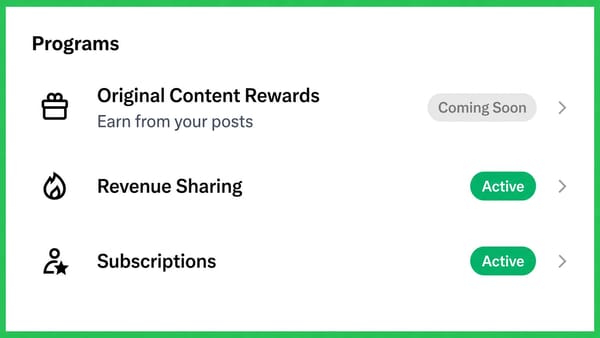
What it does change is the opportunity for creators who are consistently producing original content on X. The Original Content Rewards Program that launched on September 8 is designed specifically to pay creators for the kind of content that the casual poster who is now pulling back never produced anyway. Original reporting. Expert commentary. Genuine analysis. Creative production. These are the formats that casual personal sharing could never compete with in the first place.
The pullback also makes X's real-time advantage more valuable for serious creators. When people are retreating from casual public sharing across all platforms, the place where real-time original content from credible voices still drives significant engagement and discovery is more valuable, not less. X is still the platform where a well-timed, well-reasoned post on a breaking story in your niche can reach an audience that no other platform delivers in the same way.
The practical implication for X creators: the people leaving X are primarily the casual, low-frequency posters who were never your core audience anyway. The people staying are the ones who are there specifically for the real-time, text-driven, opinion-led content that X does better than anyone else. That is a more valuable audience to build with, and it is the audience that X's new monetization program is specifically designed to reward you for serving.
The specific creator behaviors that win in this environment
Understanding the opportunity is one thing. Knowing what to do with it is another. Here is what the data consistently shows works for creators in an environment where casual posting is declining and the audience is becoming more selective.
Show up when others do not. The most direct benefit of the posting pullback for consistent creators is competitive. When 55% of people are posting less, the feed has more room for the people who are still posting. Consistency in an environment of increasing inconsistency is a genuine advantage. The creators who maintained their publishing schedule through the summer of 2026, when the pullback was most pronounced, will find Q4 significantly easier than those who let their consistency slip.
Be more human, not more polished. The people pulling back from social media are doing so partly because it has started to feel fake, produced, and algorithmically driven rather than genuinely human. The antidote is not better production quality. It is more visible humanity. More specific personal perspective. More genuine voice. More imperfect but real. The 55% who are posting less are not looking for higher production values when they scroll. They are looking for something that feels real in a feed that increasingly does not.
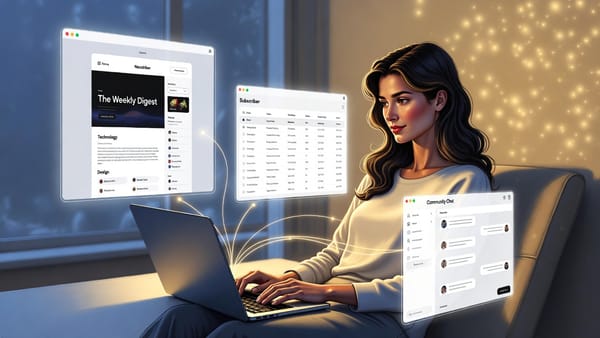
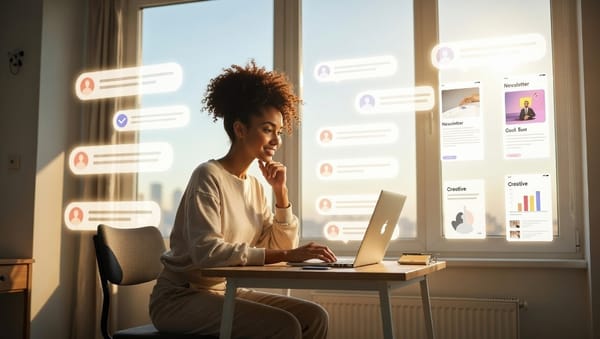
Build in private channels alongside public ones. One of the most significant behavioral shifts in the data is that people are not stopping social communication. They are moving it to private spaces. More people are sharing posts and updates with their closer connections within private DM groups rather than publicly. For creators, this is a signal to build private audience channels alongside public content. A newsletter, a community, a private group — these are the spaces that capture the audience members who are pulling back from public social media but still want genuine connection with creators they trust.
Use X's real-time advantage deliberately. On X specifically, the retreat from casual public posting makes original real-time content more valuable, not less. When a story breaks in your niche, a product launches, a trend emerges, or a cultural conversation starts, being one of the first credible voices to publish a thoughtful, specific, expert take on it is an opportunity that the pullback has made less crowded than it was two years ago. The casual commentary that used to flood X within minutes of any news event is declining. The space it leaves is for the creator who has something genuinely worth saying.
Social media is maturing, not dying
The 55% posting decline is not a sign that social media is falling apart. It is a sign that social media is maturing. The early internet was characterized by widespread participation in public social sharing. As platforms aged and the experience of public sharing became more complicated, more algorithmically distorted, and more commercially saturated, the natural evolution was always going to involve most people settling into a consumer role rather than a creator role.
That maturation was always going to benefit the minority who chose to create consistently. The difference between a mature social media ecosystem and a young one is not that audiences disappear. It is that the signal-to-noise ratio improves for the creators who are genuinely worth following.
Social media is becoming less social and more entertainment-oriented, less about sharing your life and more about finding content that is worth your time. That is not a crisis for creators. It is a clearer mandate. Be worth people's time. Be specific and genuine and consistent. Be the creator people actively seek out in a feed they no longer trust to surface what they actually want to see.
The 55% who are posting less are telling you exactly what kind of creator to be: the kind they would pull out of their algorithm and follow directly because they know it will be worth it.