

Grok Bot Galaxy: What three people building a company in 72 hours tells every creator
Three people. No product. No plan. 72 hours. One AI team. What they built live tells you everything about where AI is actually heading.

Another personal Project: Meet VitaSnap, my first wellness web app, built entirely with Grok Build. Snap your meals, discover recipes, try quick exercises, take calming breaks, and make everyday wellness a little simpler. Try it out now and let me know what you think!


From September 15 to 17, 2026, three people sat down in front of cameras in San Francisco with a blank whiteboard, no product, no company name, and no plan. Their only team was Grok Bot. And they streamed the entire thing live for anyone in the world to watch for free.
The event was called Grok Bot Galaxy. SpaceXAI organized it. Elon Musk promoted it. And the premise was as direct as it gets: can a small team of humans use AI agents to build an entire company from scratch, from idea to working product, in 72 hours?
For creators and entrepreneurs watching from anywhere in the world, this was not just an interesting tech demo. It was the most honest, public, uncontrolled test of what AI agents can actually do for someone building something independently that has ever been broadcast live. And what it showed has direct, practical implications for how you think about building your own business with AI right now.
What Grok Bot Galaxy actually was
Most AI product demonstrations are short, tightly controlled, and designed to show a specific capability working perfectly under ideal conditions. You see a task completed successfully. The rough edges are edited out. The failures are not broadcast.
Grok Bot Galaxy was designed differently. Three SpaceXAI team members, Matt Palmer, Lauren Tan, and Roshan Sadanani, started with literally nothing and used Grok Bot as their primary team across every function of building a company. Not just coding. Not just writing copy. Every function.
Day one covered the foundation. An introduction to Grok Bot, how it works, what it can do, and how the team planned to use it. Then engineering development, product management, and a session specifically for founders about how to think about AI agents as team members rather than tools.
Day two moved into the operational layer. Sales engineering, sales processes, sales development, and customer support. The sessions showed Grok Bot handling the kinds of tasks that most small businesses and solo entrepreneurs spend enormous amounts of time on: drafting outreach, handling customer questions, supporting the sales process from initial contact through to close.
Day three covered the creative and marketing side. Marketing operations, post-sales processes, and marketing sessions that showed how Grok Bot could handle content strategy, campaign planning, and the ongoing work of building an audience and keeping customers engaged.
The livestream ran from 8:30 in the morning to 6 in the evening across all three days, with department-specific sessions hosted by different SpaceXAI team members. Anyone could register for the livestream for free and watch from anywhere in the world. The in-person event was held at The Howard in San Francisco, but the global audience watching online was the real audience this was designed for.
Why this was different from every other AI demo you have seen
The most important thing about Grok Bot Galaxy was not what it showed. It was how it showed it.
Most AI demonstrations give you a finished result and work backward to explain how the AI produced it. You see the output. You are told the AI made it. The process between prompt and result is largely invisible.
Grok Bot Galaxy showed the process live, in real time, with the possibility of failure built into the format. The three hosts were explicit about this before the event started. They had a playful pizza penalty if they failed to deliver a working product by the end of day three. That detail matters because it signals something serious: this was a genuine attempt, not a rehearsed performance.
When you watch a live build rather than a polished demo, you see things that controlled demonstrations never show. You see where the AI agent gets stuck. You see where human judgment has to step in. You see the moments where the output needs significant editing before it is usable. You see the real rhythm of working with AI agents as part of a team rather than as a magic button that produces perfect results.
For creators and entrepreneurs who have been trying to figure out where AI genuinely helps and where it falls short, that honest, unfiltered view is more valuable than any number of polished product videos. It tells you what actually works in practice, not what looks impressive in a demo.
What Grok Bot is and why it matters for creators specifically
Before getting into the lessons, it is worth explaining what Grok Bot actually is, because it is meaningfully different from the Grok chatbot most X users already know.
Grok Bot is an AI agent. It does not just answer questions or generate text when you ask it something. It takes on ongoing tasks, maintains memory of what it has done and what comes next, runs in parallel across multiple workflows simultaneously, and operates inside the tools and platforms you already use.
The way SpaceXAI describes it is useful: Grok Bot provides persistent cloud computers, memory, routines, and parallel workflows. That combination of persistent memory, the ability to work in parallel across multiple tasks, and integration with real tools is what separates an AI agent from a standard AI chatbot.
For a creator or entrepreneur, the practical difference is significant. A standard AI chatbot helps you with individual tasks one at a time. You ask it to write a caption. It writes the caption. The conversation ends. You come back tomorrow and start again from scratch.
An AI agent like Grok Bot can manage an ongoing workflow. It remembers the brand voice document you gave it last week. It knows what content you published yesterday and what is scheduled for tomorrow. It can handle multiple tasks simultaneously, drafting your newsletter while researching your next piece of content while monitoring your analytics for performance signals. It works the way a real team member works, continuously, with context, across the full scope of what you are building.
That is a meaningfully different kind of help than most creators are currently getting from their AI tools.
The specific lessons that matter for creators and entrepreneurs
Watching three people build an entire company in 72 hours using AI agents produces a set of observations that are directly relevant to any creator or entrepreneur thinking about how to use AI in their own business right now.
The human is still the director, not the passenger.
The most consistent thing visible across every session of Grok Bot Galaxy was that the humans were never passive. They were constantly making decisions. Which direction to take the product. Whether the output Grok Bot produced was good enough or needed revision. What the next priority was. How to respond when something did not work as expected.
Grok Bot handled the execution. The humans handled the judgment. That division of labor is exactly what every creator who has used AI effectively for any length of time will recognize. AI does not replace your decision-making. It removes the execution bottleneck that was slowing your decision-making down.
For creators specifically, this is the most important lesson. The value you bring to your content business is not the ability to write a caption or draft a newsletter or schedule a post. It is the ability to decide what your brand stands for, what your audience needs, and what direction your content should move in. AI handles the execution of those decisions more and more effectively. It cannot make the decisions themselves. That is still your job. It will always be your job.
Small teams can now do what big teams used to do.
The Grok Bot Galaxy challenge was built on a specific premise: three people using AI agents should be able to cover the functional ground that previously required an entire company. Engineering. Product. Sales. Customer support. Marketing. Post-sales.
Whether you believe that premise was proven in 72 hours is less important than the direction it points. The gap between what a three-person team can produce with effective AI support and what a thirty-person team could produce without it is narrowing consistently and quickly.
For creators and entrepreneurs building independently, this trend is one of the most significant in the current AI landscape. The infrastructure of a serious content business, content production, audience management, newsletter operations, brand outreach, analytics, customer support for digital products, has historically required either a team or an enormous time investment from a solo creator. AI agents are compressing that requirement in ways that are becoming practically meaningful right now, not in five years.
The Grok Bot Galaxy livestream was SpaceXAI making that argument publicly and in real time. Whether you use Grok Bot specifically or a combination of other AI tools, the underlying point is the same. The leverage available to a small, intelligent team using AI agents well is genuinely unprecedented.
The session on marketing contained the most practical lessons.
Day three of Grok Bot Galaxy was the day most relevant to creators and entrepreneurs specifically. The marketing sessions covered how Grok Bot handles content strategy, campaign planning, audience building, and the ongoing operational work of marketing a product or business.
What the sessions showed is that AI agents are genuinely useful for the operational and analytical layers of marketing. Monitoring what is working across different channels. Drafting and iterating on copy. Planning content calendars based on performance data. Managing the distribution and scheduling of content across multiple platforms. Handling the customer communication that follows a campaign.
What the sessions also showed, for anyone paying close attention, is that the strategic and creative layer still required significant human input. The direction of the marketing, the voice of the brand, the specific angle taken on any piece of content, these were the moments when the humans had to step in and make judgment calls that the AI could not make on their behalf.
That pattern, AI handling operations, humans handling strategy and voice, is exactly what the most effective creator content workflows in 2026 look like. Grok Bot Galaxy did not invent that pattern. But it demonstrated it at a scale and in a context that made it more visible than any individual creator's personal experience with AI tools could.
The X dimension: what this means for creators building on the platform.
Grok Bot is deeply integrated with X in a way that makes the Grok Bot Galaxy event particularly relevant for creators building their presence there.
X is where the Grok Bot Galaxy conversation happened in real time. Elon Musk's promotion of the event on September 11 generated millions of impressions within a day. The SpaceXAI team members were posting updates from the build in real time throughout the three days. The commentary, the reactions, the debate about what the experiment actually proved, all of it played out on X as a live, searchable, engaging conversation that lasted for days.
For creators on X, this is a pattern worth paying attention to. Live events, public experiments, and transparent builds generate X content for days before, during, and after the event itself. The Grok Bot Galaxy livestream was not just a product demonstration. It was a content engine that produced hundreds of posts, discussions, and debates that kept the topic alive and searchable on X throughout the week.
The lesson for X creators is specific. Events, experiments, and transparent behind-the-scenes processes generate more sustained engagement on X than any individual polished post. The conversation around Grok Bot Galaxy will still be searchable on X for weeks. Creators who are covering AI and entrepreneurship topics and who published original commentary on Grok Bot Galaxy during and after the event are benefiting from that searchability right now.
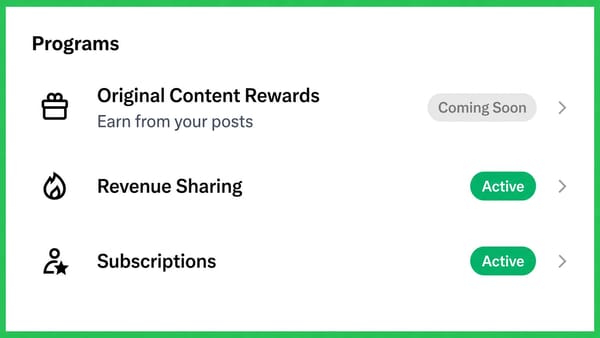
If there is a live event, a public experiment, or a transparent build happening in your niche, publishing original, specific commentary on X while it is happening is one of the highest-leverage content moves available. The Original Content Rewards Program specifically rewards this kind of original, timely, expert commentary. The Grok Bot Galaxy livestream was a three-day content opportunity for every creator covering AI, entrepreneurship, or creator economy topics on X. The ones who used it are seeing the results in their analytics this week.
What Grok Bot Galaxy proved and what it did not
It would be dishonest to present the Grok Bot Galaxy event as a clean proof that three people and an AI can build a successful company in three days. That is not what it was designed to prove and it is not what it showed.
What it proved is narrower and more useful. It proved that AI agents can handle a genuinely wide range of operational tasks across engineering, sales, marketing, and customer support at a level of quality that is useful, if not always perfect. It proved that a small team using AI agents can move significantly faster than the same small team working without them. And it proved that the concept of treating AI agents as team members rather than tools is practical enough to sustain a 51-hour public demonstration without the experiment visibly falling apart.
What it did not prove is that AI can replace the judgment, strategy, and genuine expertise that determines whether a business succeeds or fails. The three people doing the build were not passive operators pressing buttons. They were active directors making constant decisions about direction, quality, and priority. Remove them from the equation and the AI agents have no direction. Add them back and the AI agents dramatically multiply their capacity to execute on that direction.
That is exactly the relationship between AI and human creators that this newsletter has been documenting all year. The tools are genuinely powerful. The human layer is still what determines whether the power gets pointed in a direction worth going.
If you had three days, a blank idea, and Grok Bot as your team, what would you build, and what does your answer tell you about which parts of your current business are actually bottlenecked by time and execution rather than by the quality of your ideas?