

Real AI wins, fails and platform update
The response to the last newsletter article made one thing clear: this conversation is far from over

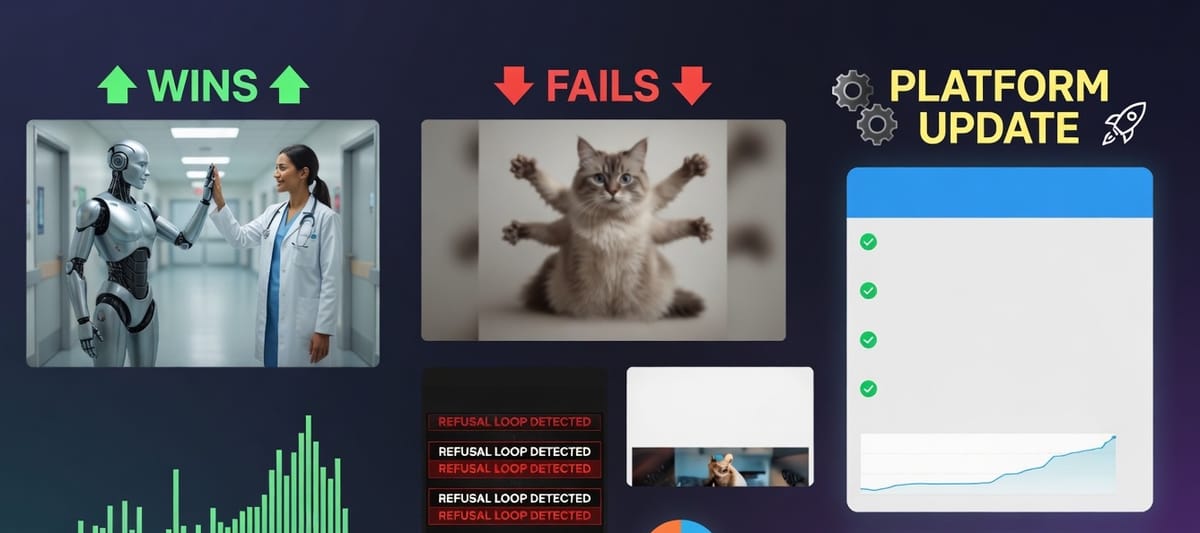
The response to the previous newsletter on Original vs. AI-Generated Content was so big that a follow-up felt necessary, so here it is. Inside: real stories from creators on the front lines, brand-new platform updates from the last 48 hours, and a simple 5-minute framework you can use to audit your own content before you hit publish.
Advertisement
 Nat Friedman
What X content creators are experiencing right now
Here are four stories that stood out (lightly edited for privacy):
1. The hybrid success story
“I made $14,200 last month on YouTube using roughly 70% AI tools and 30% my own face + commentary. I disclose everything in the description and pinned comment. Zero strikes, zero demonetization. The key wasn’t hiding the AI, it was adding my real personality on top of it.”
— @TechWithMarcus (142k subs)
2. The painful lesson
“I posted an AI-generated clip of ‘breaking news’ about a conflict zone thinking it was obviously satirical. Got hit with a 90-day X Creator Revenue suspension. Lost almost $3,800 in expected payouts. The rule is crystal clear now, if it looks real and it’s about war, you MUST label it. No exceptions.”
- Anonymous (former 48k-follower account)
3. The faceless channel wake-up call
“My pure-AI faceless history channel was doing 180–220k views per month with zero on-camera presence. YouTube demonetized the entire channel overnight under the new ‘inauthentic content’ policy. I’ve spent the last three weeks adding my voice, face, and original analysis to every video. Views are down 40% but monetization is slowly coming back. Lesson: faceless + AI = high risk in 2026.”
- @HistoryUnlocked (89k subs)
4. The anti-AI purist view
“I’ve been creating for 11 years. If everyone starts using AI to ‘augment’ their content, nothing feels special anymore. I’m not anti-tool, I’m anti-laziness. The creators who will still matter in 2030 are the ones who treat AI like a research assistant, not a ghostwriter.”
- @SlowCrafted (34k followers, zero AI use)
Advertisement

Platform updates in the last 48 hours
X (Twitter)
- Nikita Bier posted that X is now testing “Originality Signals” in the recommendation algorithm. Posts showing high “human edit distance” from raw AI drafts are getting a visibility boost.
- The 90-day war-video suspension rule is now being enforced retroactively on older posts that Community Notes flagged.
Meta (Instagram / Facebook)
- New detection model rolled out that can identify AI images even after heavy editing in Canva, Photoshop, or CapCut.
- Creators in the Reels Play bonus program are now required to disclose AI use or risk bonus disqualification.
YouTube
- Published the first official examples of what counts as “significant original commentary” (good) vs. low-effort AI narration (bad).
- Clarified that using AI for scripting + editing is fine, as long as the final video contains “substantial human creative input.”
Advertisement
 Gaurav VohraStartup Advisor & Growth Leader
Before you post: Do this 5-minute audit
Hundreds of you asked for a practical checklist. Here it is, the exact framework top creators are using right now:
Ask yourself these 5 questions:
- Personal voice: Did I add at least one personal story, hot take, or unique insight that only I could have written?
- Human presence: Is my face, voice, or real footage on screen/audio for at least 30% of the piece?
- Substantial edit: Did I rewrite, restructure, or heavily edit the AI output (not just fix grammar or add emojis)?
- Disclosure comfort: Would I be 100% comfortable telling my audience exactly which AI tools I used?
- Forward motion: Does this piece move the conversation forward, or is it just remixing ideas that already exist?
Scoring:
- 4-5 Yes answers: Green light. Post with confidence (and disclose if required).
- 2-3 Yes answers: Needs work. Add more human layers before publishing.
- 0-1 Yes answers: High risk. This is the content most likely to get throttled, demonetized, or flagged.
Tools and workflows that are actually working right now
YouTube Hybrid Workflow (Most Mentioned)
- Claude 3.5 or GPT-4o for scripting + research
- ElevenLabs or PlayHT for voice (with human intonation tweaks)
- CapCut or Premiere for editing + adding face cam / B-roll
- Final 20–30% of runtime = creator on camera giving real analysis
X / Twitter Workflow (Highest Engagement)
- AI for first draft + hook variations
- Human rewrite for voice + personal anecdote
- Manual posting (never fully automated)
- Reply to as much comments as possible in first 1 hour (this is what X rewards most)
The way I see it
The creators who will still be here and thriving in the coming year aren’t the ones who reject AI entirely, and they aren’t the ones who let AI do all the heavy lifting either.
They’re the ones using AI as a superpower while doubling down on what only humans can bring: lived experience, genuine emotion, original thought, and real connection.
That’s the real “original content” advantage in 2026.