

Social search is now the primary way people discover creators - Are you optimized for it?
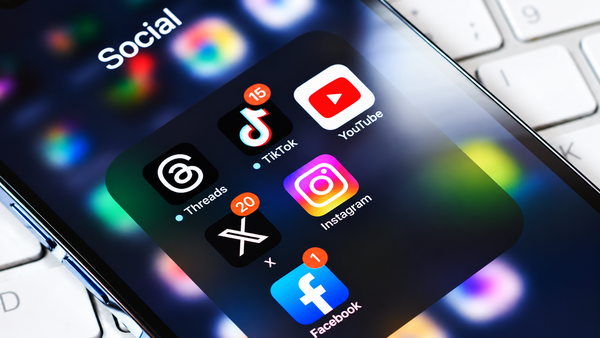
People are not Googling to find answers anymore. They are searching on TikTok, Instagram, YouTube, and X. Is your content showing up?

Ad | Littlebird is an AI assistant that already knows your work. It runs on your computer, reads the text on your screen, transcribes your meetings, and remembers everything you've been working on, so you never have to explain yourself to an AI again.
Most AI tools make you explain everything first.
— Karata (@karatademada) August 30, 2026
The context. What you’re working on. Your notes.
I’m just discovering @LittlebirdAI , and what immediately stands out is how it understands what you’re doing from what’s already on your screen and keeps context from your meetings.… pic.twitter.com/iaQ1vXjnWq
Think about the last time you wanted to find a honest product review. Or learn how to do something you had never done before. Or find a creator in a specific niche whose content would actually be useful to you.
Did you open Google? Or did you go straight to TikTok, Instagram, YouTube, or X and type your question there?
If you searched on a social platform first, you are part of a shift that every major trend report is confirming as one of the most significant changes in how people discover content online. And if you are a creator or entrepreneur who has not yet adapted your content strategy to this shift, you are invisible to a growing portion of your ideal audience, even when they are actively searching for exactly what you create.
This edition explains what social search actually is, why it matters more than ever right now, and exactly what you need to change in your content to start being found.
What social search actually is
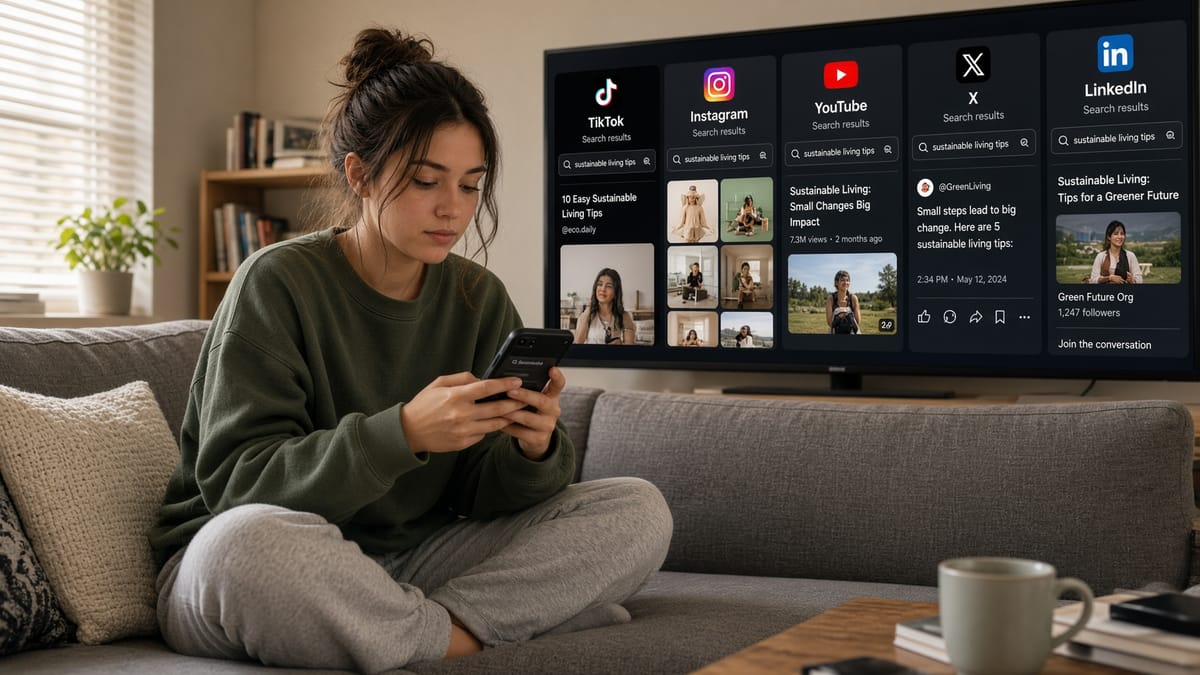
Social search is exactly what it sounds like. Instead of going to Google and typing a question, people go directly to TikTok, Instagram, YouTube, X, or LinkedIn and search there. The platforms serve them results, mostly videos and posts, that match what they typed.
This is not a new behavior. YouTube has been a search engine for years. People have been searching for tutorials, reviews, and how-to content on video platforms for as long as those platforms have existed.
What is new is the scale, the range of queries, and the age groups doing it. 64% of US Gen Z adults report using TikTok as a search engine. That number has been climbing every year. And it is no longer just Gen Z. Millennials, professionals, and consumers across every demographic are increasingly turning to social platforms as their first stop for information that used to send them to Google.
The types of questions people search for on social platforms are also expanding. It used to be primarily how-to and tutorial content. Now it includes restaurant recommendations, product comparisons, brand research, creator discovery, local recommendations, professional advice, and almost any question that used to go to Google first.
For creators and entrepreneurs, this shift has one very practical implication: the content you publish is now either findable through social search or it is not. And if it is not, a growing portion of your potential audience will never encounter it, regardless of how good it is.
Why this is different from what most creators are currently doing
Most creators are still optimizing their content for the feed. They think about the hook, the format, the trend, and the algorithm. They ask: will this perform well when the algorithm shows it to people who already follow me or who are passively scrolling?
Social SEO in 2026 is roughly where Google SEO was in 2010: the ranking factors are understood, the tools are primitive, and most creators are still running on a broadcast model that optimizes for reach rather than discoverability.
That is a fundamentally different question from: will someone find this when they search for a specific topic two months from now?
Feed optimization and search optimization are not the same thing. Content optimized purely for the feed performs well in the first 24 to 48 hours after posting and then disappears. Content optimized for social search can keep getting discovered for months or even years after it was published, every time someone searches for the topic it covers.
A well-optimized TikTok video earns views on day one from the algorithm. It earns views on day 300 from search. Those are fundamentally different economics than content that lives and dies in a 48-hour feed cycle.
The creators who understand this distinction are building content libraries that function as long-term discovery assets rather than short-term reach plays. And the gap between those creators and the ones still optimizing only for the feed is widening every month.
How social search actually works on each platform
Each major platform has its own social search system and they work slightly differently. Here is what matters practically on each one.
TikTok
TikTok reads audio, on-screen text, captions, and metadata simultaneously. Its ranking model weights completion rate heavily, what percentage of viewers watch the full video, as a proxy for content quality.
This means that when someone searches for a topic on TikTok, the platform is not just looking at whether your caption mentions the keyword. It is listening to whether you say the keyword out loud, reading whether it appears as text on the screen, and checking whether people who find the video through search actually watch it all the way through.
The practical implications are direct. If you want your TikTok content to be found through search, say your main keyword or phrase in the first three seconds of the video. Show it as on-screen text. Write your caption as a short, direct answer to the question someone would search for. And keep the video focused on one specific topic rather than covering multiple ideas, because mixing topics dilutes the search signal the algorithm is trying to read.
Instagram's social search system has developed significantly in 2026. Reels now appear directly in Google search results. Instagram indexes display names alongside handles, making keyword placement in both fields a genuine discoverability lever.
Your Instagram profile name is now a searchability tool. If your display name says only your name rather than your name plus what you do, you are missing a meaningful discoverability opportunity. The platform's search algorithm reads your display name as content, not just as a label.
For Reels specifically, the caption is where Instagram's search algorithm looks most closely. Write captions that describe what the video covers using the actual words your audience would type into the search bar. Not marketing language. Not clever wordplay. The specific phrases people use when they are looking for what you create.
Stories drive traffic via link stickers but are not indexed by Google. Use them for conversion, not discovery. Stories are not searchable. They are useful for directing existing followers to take action, but they will not help new people find you through search. Your Reels and feed posts are your search assets. Your Stories are your conversion tool.
YouTube
YouTube functions as the central connector in the social search ecosystem. Videos optimized for search, embedded in blog posts, and amplified across social media are more likely to be cited or summarized in AI tools like Google Overviews, ChatGPT, and Perplexity.
Your video title is the single most important search signal on YouTube. It should describe exactly what the video covers using the words someone would search for, not a creative or clever title that sacrifices clarity for intrigue.
Your video description matters more than most creators realize. YouTube's algorithm reads the full description to understand what the video is about and match it to relevant searches. A two-sentence description leaves most of that signal unused. A thorough description that explains what the video covers, who it is for, and what someone will learn from it gives the algorithm significantly more to work with.
Chapters and timestamps serve two purposes: they help viewers navigate your video, and they help YouTube's algorithm understand which specific questions different sections of your video answer. A well-chaptered video is more likely to appear in search results for the specific sub-questions each chapter addresses.
Long-form tutorials and reviews lead in YouTube social search performance. Content that answers a specific question thoroughly and completely outperforms content that covers a topic briefly at the surface level.
X
X is the most underrated social search engine in the creator economy right now, and the one where most creators are leaving the most discoverability on the table.
X's search function indexes every public post in real time. When someone searches for a topic on X, they are searching across a live, constantly updated library of posts, threads, and conversations from every public account on the platform. That is a fundamentally different kind of search from TikTok or YouTube, which index polished content created specifically for the platform.
What this means practically is that X search rewards specificity and consistency over time rather than production quality. A creator who has published 50 posts over six months that consistently use the same specific language around a particular topic will have built a searchable archive that surfaces every time someone searches for that topic on X. Each individual post does not need to be exceptional. The body of work, taken together, creates a discoverable presence.
The most important search optimization actions on X are simpler than on any other platform. Use specific, descriptive language in every post rather than vague or clever phrasing. Name your topic clearly rather than alluding to it. Write posts that could stand alone as answers to questions someone might search for rather than posts that only make sense in the context of your existing followers knowing who you are.
X search is also particularly powerful for real-time discovery. When something is happening in your niche right now, today, being one of the first creators to publish a thoughtful, keyword-specific post about it makes you discoverable to everyone searching for that topic in the hours and days that follow. X is the only platform where publishing at the right moment on the right topic can generate search discovery within minutes rather than weeks.
The Original Content Rewards Program that X launched in August 2026 directly reinforces this. The program specifically rewards creators who break news, share expertise, and contribute meaningful perspectives to conversations. Those are exactly the types of content that perform best in X search. Building your content strategy around genuine expertise and timely, specific insight is simultaneously the right approach for X monetization and for X search discoverability.
LinkedIn's social search is the least discussed but increasingly relevant for creators and entrepreneurs whose audience is professionally oriented. The platform's algorithm prioritizes content that matches specific professional search queries, meaning that how you write your posts, your profile headline, and your content descriptions directly affects whether professionals in your target niche find you when they search for relevant expertise.
For LinkedIn specifically, the most important search optimization action is being explicit in your content about the specific audience you serve and the specific problem you help them solve. Generic professional content ranks poorly in LinkedIn search. Specific, expertise-driven content aimed at a well-defined audience ranks well.
The AI connection: why social search matters for AI discovery too
There is a dimension to social search that most guides completely overlook and that is becoming increasingly significant.
One of the most important developments this year is the tightening connection between social SEO, traditional SEO, and AI-driven discovery. Tools like ChatGPT, Perplexity, and Google's AI Mode are increasingly pulling from social content when constructing answers to user questions. A creator whose YouTube content is well-optimized for search and embedded in relevant blog posts is more likely to be cited or referenced when an AI tool answers a question in their niche.
Your creator content should be built for search, not just social feeds, because people now search on TikTok, YouTube, X, Reddit, Google, and AI answer tools before they buy.
For creators building authority in a specific niche, this convergence between social search and AI discovery is one of the most significant opportunities available right now. Content that answers real questions with genuine expertise is being surfaced across more discovery surfaces than at any previous point. The creators building that kind of content library are compounding their discoverability in ways that purely feed-based content strategies never could.
The practical changes to make this week
Understanding social search is one thing. Changing your content to benefit from it is another. Here are the specific, actionable changes that will have the most immediate impact.
Start with your profile.
Before you change anything about your content, optimize your profile on every platform where you publish. Your display name, bio, and profile description are the first things the search algorithm reads to understand what you cover and who you serve. Add your main content topic or niche to your display name where the platform allows it. Write your bio using the specific words your audience would use when searching for the kind of content you create. This one change affects the discoverability of every piece of content you publish, past and future.
Research what your audience is actually searching for.
The most common social search optimization mistake is optimizing for the words you use to describe your content rather than the words your audience uses to search for it. Those are often different. Spend 20 minutes on TikTok, YouTube, Instagram, and X typing the topics you cover into the search bar and watching what the auto-complete suggests. Those suggestions are real searches being made by real people in your niche. The language the platform suggests is the language your content should use.
Say your keywords out loud.
On TikTok and Instagram Reels, the algorithm listens to your audio. If you cover a topic but never say its name out loud in the video, the platform has less to work with when matching your content to relevant searches. Build the habit of naming your main topic clearly in the first few seconds of every video. Not as a mechanical SEO exercise. As a natural part of how you introduce what the video is about.
Write captions as answers, not descriptions.
Most creators write captions that describe their content. Search-optimized captions answer the question someone would type to find that content. Instead of "Here are my tips for growing on X," write "How to grow on X after paying for Premium." The second version matches the actual search query. The first version describes what you made but does not match how someone would search for it.
Create content around specific questions, not broad topics.
The content that performs best in social search is not content about a broad topic. It is content that answers a specific question completely. Instead of a video about social media strategy, make a video that answers: "How do I get more reach on Instagram without buying ads?" Instead of content about AI tools, make content that answers: "Which AI tool is best for writing newsletters?" Specific questions have specific searchers who are actively looking for exactly that answer.
On X specifically: build a searchable archive through consistency.
Unlike other platforms where individual pieces of content need to be optimized as standalone assets, X rewards creators who build a consistent, searchable body of work over time. Posting specifically and consistently about your niche on X means that your archive becomes more valuable as a search asset every week. A creator who has posted 200 times about AI and social media over six months has built something that no single viral post could replicate: a searchable record of genuine expertise that surfaces every time someone on X searches for that topic.
Build a content series around recurring searches in your niche.
The creators building the most durable search presence are not publishing one-off videos on random topics. They are building connected series of content that systematically covers the questions their audience most commonly searches for. Each piece of content in the series reinforces the others, builds topical authority in the platform's algorithm, and creates a body of work that keeps getting discovered long after each individual piece was published.
The window of opportunity that is still open
One of the most practically useful things to understand about social search right now is that most creators are still not optimizing for it. The shift is happening. The behavior is changing. The platforms are building for it. But the majority of creators are still producing content purely for the feed without thinking about how it will perform in search.
The window for first-mover advantage in social search is closing, but it has not closed. The creators building search-optimized social content libraries today are building compounding assets that keep working long after they publish.
This matters for you specifically because the first-mover advantage in any search ecosystem is significant. The creators who optimize their content for social search now, before it becomes standard practice, will hold discoverability positions that are genuinely difficult to displace once established. The creator who has 50 well-optimized pieces of content answering the specific questions your audience is searching for has a durable advantage over a creator who starts optimizing later, even if the later creator produces better individual pieces of content.
The gap between understanding social search and acting on it is where most creators leave meaningful discoverability on the table. The understanding is now relatively widespread. The action is still rare.
Think about this: If someone in your ideal audience opened TikTok, YouTube, Instagram, or X right now and searched for the main topic your content covers, how many of your videos or posts would appear in the results? And if the answer is fewer than you would like, what does that tell you about the difference between the content you are making for the feed and the content you could be making for search?