

Stop judging your content by views
If the first thing you do after posting is check your views, this article is going to change how you think about your content forever.

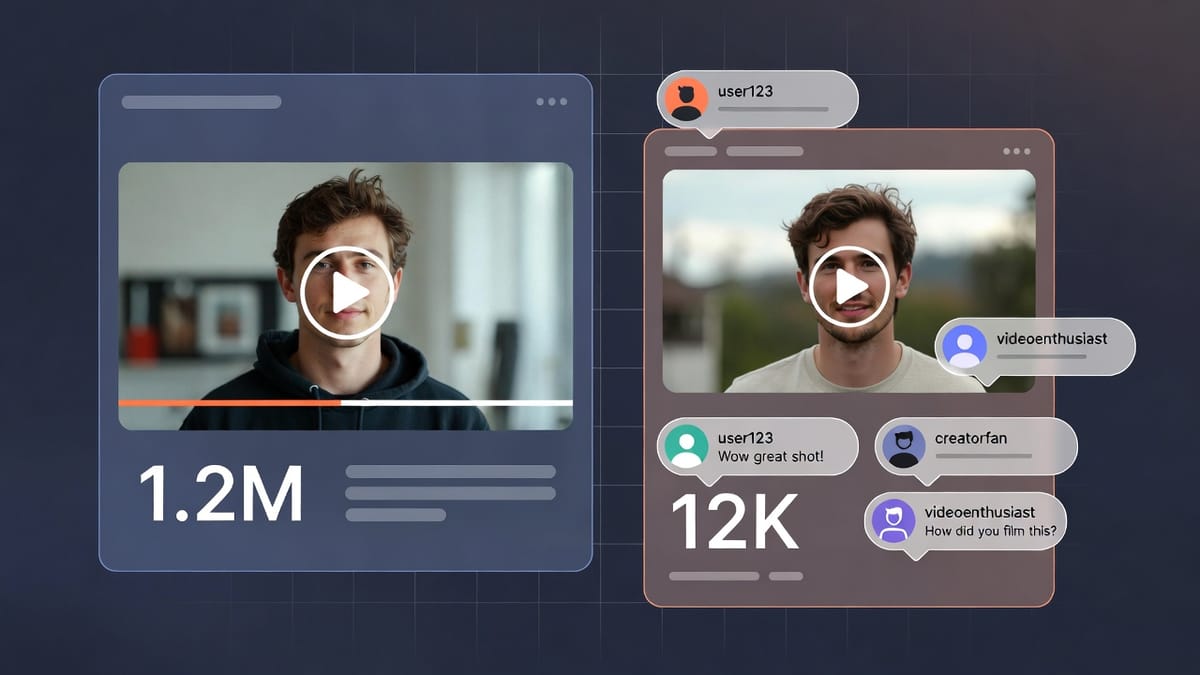
For a long time, I judged my content by one thing: views.
I think a lot of creators do. A post goes out. You check how many people saw it. High number, good post. Low number, bad post. Simple, measurable, and completely wrong.
The problem with views is not that they are irrelevant. It is that they are easy to chase in ways that have nothing to do with building something real. A controversial take gets views. A misleading headline gets views. A post that catches a trending audio at exactly the right moment gets views. None of those things tell you whether your content is actually improving, whether your audience is actually invested, or whether what you are building is going anywhere worth going.
I pay attention to different signals now. And once you start tracking the right things, you realize that your content is often getting better long before your analytics catch up.
Advertisement
Create, grow and monetize your newsletter with Beehiiv:


Why views became the default metric and why that is a problem
Views are visible, immediate, and easy to compare. Every platform puts them front and center. They feel like the clearest measure of whether anyone cared about what you made.
But views are an awareness metric, not a quality metric. They measure how many people your content reached, not what those people did with it, how long they stayed, whether they came back, or whether they told anyone else. A view is someone glancing at a storefront window as they walk past. It tells you very little about whether they came inside.
Every major platform has acknowledged this. The metrics that actually influence algorithmic distribution have quietly shifted away from raw view counts toward behavioral signals: how long people watch, whether they save, whether they share, whether they comment with something more than a single word, and whether they come back for the next piece. Platforms are evaluating content quality through what people do after they see it, not simply that they saw it at all.
The creators who are growing real audiences right now are the ones who figured this out. They stopped optimizing for views and started optimizing for the signals that actually indicate something worth building is happening.
The real signals that tell you your content is improving
These are not theoretical. They are things you can observe in your comments, your messages, your analytics, and the behavior of your audience over time. And unlike views, they are very hard to fake.
People read or watch until the end.
This is the most fundamental quality signal available to you. Every platform tracks it. TikTok's primary metric in 2026 is video completion rate, not view count. YouTube weights watch time and audience retention above almost everything else. Instagram's algorithm prioritizes content that holds attention over content that merely captures it.
When people consistently watch or read your content to the end, the platform interprets that as a strong quality signal and expands distribution accordingly. More importantly, it tells you something that a view count never can: people found your content worth finishing. That is the foundation of everything else.
If you notice your completion rates going up even when your view counts are flat or declining, your content is getting better. The algorithm will catch up eventually.
Comments become longer and more thoughtful.
There is a significant difference between a comment that says "great post" and a comment that says "this made me rethink how I approach my content calendar entirely." Both are positive. Only one of them tells you that your content reached someone deeply enough to change how they think.
Long, thoughtful comments require effort. They happen when someone read or watched everything you made, had a genuine reaction to it, and cared enough to take the time to share that reaction in detail. A single paragraph comment from a reader who engaged with your ideas is worth more as a quality signal than a hundred fire emojis from people who watched the first three seconds.
Advertisement
Get video ideas, write YouTube scripts in minutes, and follow what your competitors are doing:

When your comment section starts shifting from short reactions to genuine conversation, your content is connecting at a different level. That shift often happens quietly, weeks before anything in your view counts suggests things are changing.
People start asking questions.
This is one of the most reliable signals that your content is genuinely working, and it is one of the most overlooked.
When someone asks you a question in a comment or a DM, they are telling you several things simultaneously. They finished your content. They found it credible enough to want more from. They trust you enough to ask directly. And they have a specific need that your content raised but did not fully answer, which means you have earned their attention and identified your next piece of content at the same time.
Questions signal authority. They signal trust. And they give you a direct line into exactly what your audience needs from you next. A creator who is getting genuine questions from their audience has built something far more valuable than a high view count from passive scrollers.
The same followers keep coming back.
Repeat engagement is one of the most powerful and least discussed signals in the creator economy. When the same names appear in your comments across multiple posts, when the same people open every newsletter you send, when your returning visitor rate on your blog is climbing even as new visitor traffic stays flat, something important is happening.
You are building loyalty, not just reach.
Reach is what happens when you get lucky with an algorithm or catch a trend. Loyalty is what happens when you consistently deliver something worth coming back for. One of those things is replicable and compound. The other is unpredictable and temporary.
A creator with 5,000 followers where the same 500 people engage with nearly everything they publish has a more valuable audience than a creator with 50,000 followers where engagement is spread thin and random across a different 200 people every time. The first creator has built a community. The second has built a directory.
People mention or share your content with others.
Shares are the strongest behavioral signal any platform measures. TikTok recorded a 45% year-over-year increase in shares per post, while average comments per post actually fell. Platforms have identified sharing as the most meaningful proxy for genuine value: people share content they think is worth sending to someone specific.
When someone shares your content, they are vouching for it to their own network. They are telling their followers, their friends, or their colleagues that something you made is worth their attention. That is a fundamentally different action from a like or even a comment. It requires the sharer to stake a small amount of their own credibility on your content being good.
When your content starts getting shared with people who do not follow you, your ideas are traveling on their own. That is the point where content stops being just content and starts becoming a real growth engine.
What the platform data confirms about these signals
The shift in how creators should measure their content is not just a philosophical argument. The platform data supports it directly.
Saves now count heavily in algorithmic ranking on Instagram. When someone saves your post, they are bookmarking it for later because they found it genuinely useful enough to return to. A creator with a high save-to-like ratio consistently outperforms a creator with a higher raw engagement rate whose audience only double-taps and scrolls on.
On LinkedIn, original content that generates thoughtful comments and saves from professional connections gets five times more reach than reshared content. The algorithm specifically evaluates whether content sparks meaningful interaction before deciding how widely to distribute it.
On YouTube, channels that build topical authority by consistently covering one subject deeply perform better than channels chasing random viral trends. If users click but leave quickly, the algorithm treats that as a negative quality signal and reduces distribution. If they stay and finish, distribution expands.
The pattern is consistent across every platform: algorithms in 2026 evaluate how people behave after they see your content, then decide how far it should travel. Views tell the algorithm who saw it. Saves, shares, completion rate, and return visits tell the algorithm whether it was worth seeing.
Why your content is improving before your analytics show it
This is the insight that most creators miss, and it is the one that matters most when you are in the early stages of building something or going through a period where growth feels stalled.
Analytics are lagging indicators. They tell you what happened, not what is happening. The decisions you make today about content quality, audience trust, and consistency will not show up in your view counts, follower numbers, or reach metrics for weeks or sometimes months. But they will show up immediately in the behavioral signals of the audience you already have.
If your comments are getting more thoughtful, your content is improving. If the same people keep coming back, your content is improving. If people are starting to share your posts with others or ask you genuine questions, your content is improving. The algorithm will catch up. The growth will follow. But the signal that things are working comes from human behavior long before it shows up in a dashboard.
This is why obsessing over view counts during periods of slow growth is counterproductive. It measures the wrong thing at the wrong time and often leads creators to make changes that actually reverse the improvements they have already made, pivoting away from a direction that was genuinely working simply because the numbers had not caught up yet.
Trust the behavioral signals. They are telling you the real story.
How to start measuring what actually matters
You do not need expensive tools or complex systems to start tracking the right signals. Here is a practical framework you can implement this week:
Track completion rate above everything else. Most platforms show you this data directly. Make it the first number you look at after every post, not the view count. A post with 1,000 views and 80% completion rate is performing better than a post with 10,000 views and 15% completion rate.
Read your comments with genuine attention. Not for quantity, but for quality. Are people saying something specific? Are they referencing a detail from inside the content that proves they finished it? Are they asking questions? These are the comments that tell you something real.
Count your returning audience. On your blog or website, your analytics will show you the ratio of new versus returning visitors. On your newsletter platform, track your open rate over time and pay attention to which subscribers open consistently. On social media, notice which usernames appear repeatedly across your posts. These returning audience members are your most valuable asset.
Track saves and shares separately from likes. Both saves and shares are stronger signals than likes. A piece of content that people want to save for later or send to someone else is doing something that purely likeable content is not. It is being useful in a way that persists beyond the moment of consumption.
Note when questions arrive in your DMs or comments. Keep a simple running document of the questions your audience asks you. These are not just quality signals. They are your content calendar.
Views are one piece of the puzzle
They are not nothing. But they are the least specific piece of information available to you as a creator, and building your entire strategy around chasing them is a reliable way to produce content that looks successful while actually going nowhere.
The creators building durable, growing businesses in 2026 are the ones paying attention to depth over volume. Longer comments over more likes. Returning audiences over raw reach. Saves and shares over impressions. Questions from their readers over passive consumption.
Sometimes your content is getting better long before your analytics catch up. Learn to read the signals that tell you so. They are there in every post, every comment section, and every message you receive, waiting to tell you the truth about what you are building and where it is going.
Your next step: Open your analytics on your most recent piece of content. Ignore the view count entirely. Look at the completion rate, count the comments that are longer than one sentence, check how many saves or shares it received, and note whether anyone asked you a question because of it. That snapshot tells you more about the quality of what you are building than any view count ever will. Do it for your last five posts and look for the trend. That trend is your real performance story.