

The World Cup is over - What every Creator should take away from it
The 2026 World Cup ended on July 19, but the most important story from the last 39 days was not what happened on the pitch.
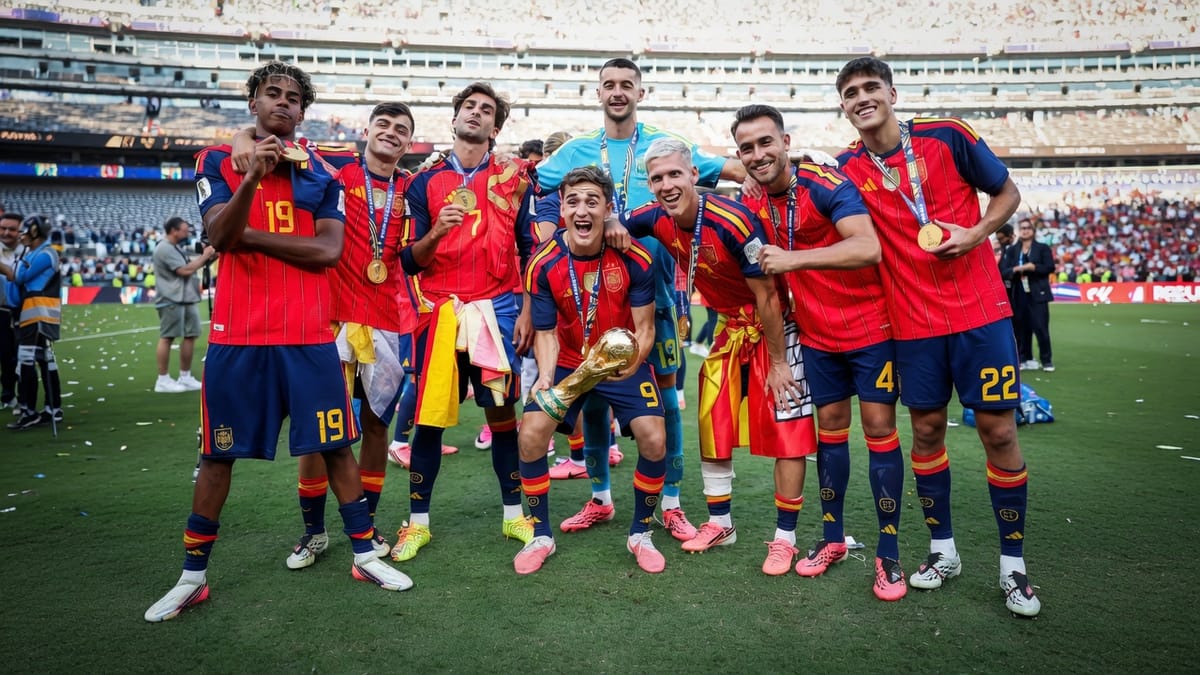
Spain are world champions.
On July 19, 2026, at MetLife Stadium in East Rutherford, New Jersey, Ferran Torres scored in the 106th minute to give Spain a 1-0 victory over Argentina in the most watched sporting event of the decade. It was Spain's second World Cup title, 16 years after their first in South Africa. Argentina, the defending champions, fell one step short of becoming the first back-to-back champions since Brazil in 1962. Lionel Messi, visibly emotional at the final whistle, played what may have been his last match in an Argentina shirt.
More than 80,000 people were inside MetLife Stadium. Approximately 50,000 more watched from Central Park. Six billion people tuned in worldwide in some form.
And throughout all 39 days and 104 matches of this tournament, something significant happened in the creator economy that went mostly unreported in mainstream sports coverage. The 2026 World Cup was not just a football tournament. It was the most important case study in creator marketing the industry has ever produced, and the lessons it generated apply to every creator and entrepreneur regardless of whether they posted a single piece of football content this summer.
Here is what actually happened, and what it means for how you build from here.
Advertisement
Get the best AI Campaign and Page Builder in ecommerce - for Shopify, headless, digital goods and more. Join 50,000+ stores in selling more on the Internet with Replo.

Creators did not cover the World Cup. They became it.
The most significant shift of this tournament was not a result, a goal, or a controversy on the pitch. It was a fundamental change in how fans experienced the event itself.
For the first time in World Cup history, creator content was not supplementary to the official broadcast experience. For a significant portion of the global audience, particularly viewers under 35, it was the primary experience.
Streamers like IShowSpeed provided real-time, authentic commentary and fan reactions that reshaped how younger generations consumed the tournament. Twitch emerged as a digital stadium where creators were not just reacting to the matches, they were hosting the conversation around them. YouTube's Creator Cup brought creators and athletes onto the pitch in New York on July 12, streamed worldwide, blurring the line between content creation and the event itself.
The group stage alone generated more than 1.1 billion hours watched across livestreaming platforms, much of it through creator-led coverage rather than licensed broadcasts. FIFA's strategic TikTok partnership brought creators inside the official tournament experience rather than leaving them to comment from the outside. The shift was structural, not incidental. Creator access was treated as infrastructure for the first time in World Cup history.
The lesson for creators in every niche is clear. Cultural moments no longer belong exclusively to the institutions that own them. They belong increasingly to the creators who translate them for the audiences that trust them. The 2026 World Cup did not just happen on the pitch. It happened in comment sections, livestreams, reaction videos, and newsletter inboxes. The creators who showed up consistently and authentically throughout the tournament built something that outlasts the event itself.
The Tim Payne story is the most important creator lesson of the tournament
No story from this World Cup captures the current state of the creator economy more precisely than what happened to New Zealand defender Tim Payne.
Before the tournament, Payne had approximately 4,700 Instagram followers. Then Argentine creator Valentín Scarsini, with nearly 2 million followers, described Payne as the least known player at the tournament and encouraged his audience to follow him. Payne's account grew to 5.6 million followers, surpassing the entire population of New Zealand.
Brands including Google, McDonald's, and Duolingo organically joined his thank-you video, which generated 3.6 million total actions. He subsequently signed a professional contract with Paraguayan club Olimpia, which used his new global following as part of the announcement.
None of this was planned. None of it was paid. It happened because one creator with a genuine audience pointed their community toward something worth paying attention to, and that community responded.
The lesson is not that overnight success is random or that virality is a strategy worth chasing. The lesson is about what determines whether sudden attention becomes a lasting opportunity or simply disappears after 48 hours.
Payne spent nearly two decades becoming genuinely good at his craft before his moment arrived. When the attention came, he had something real for it to land on. He had a clear identity, an active presence, and a genuine story. The creator community that discovered him found something worth staying for.
Every creator and entrepreneur building right now should ask themselves the same question: if someone with 2 million followers pointed their entire audience at you tomorrow, would they find something worth following? That question is not about having a perfect profile or a polished brand aesthetic. It is about whether you have been consistently showing up with something genuinely worth finding.
The brand divide that defined this tournament
The 2026 World Cup exposed a fundamental divide in how brands approach creator marketing, and the results on both sides of that divide were stark.
On one side were the brands that built creator-led campaigns around the tournament, treating creators as central to their strategy rather than as a distribution channel for traditional advertising. Unilever activated a network of 50,000 creators across more than 35 brands and 120 markets. Adidas generated nearly $49 million in earned media value from creator content in the first three weeks alone. Nike ran a sustained rollout designed to keep audiences engaged across the full tournament window rather than concentrating spending in the opening week.
On the other side were the official sponsors who relied primarily on broadcast exposure and in-stadium branding, treating the creator economy as a secondary channel rather than a primary one.
The performance gap between these two approaches was not subtle. Audiences no longer want to be marketed to during cultural moments. They want to experience those moments alongside personalities they already trust. A brand that showed up through a creator an audience already followed felt like it belonged in the conversation. A brand that showed up through a stadium banner felt like it was interrupting one.
The practical implication for creators is significant. Brands are actively seeking creator relationships that feel authentic rather than transactional. The brands winning the World Cup are not just borrowing a creator's audience for 39 days. They are using the moment to build something they still own when the football season ends. That kind of relationship requires a creator who has built a genuine, trusted community, not just a large following. A smaller audience with real trust is worth more to a brand making that kind of investment than a larger audience with low engagement.
If you have been building a genuine community around a specific niche, the demand for what you have built is not decreasing. It is accelerating. The World Cup just demonstrated that at a scale of six billion viewers.
What worked for creators throughout the tournament
Looking back across 39 days of tournament content, the patterns in what consistently performed are clear and directly applicable to how you approach any major cultural moment going forward.
Speed and authenticity over production quality. The content that generated the most engagement throughout this tournament was not the most polished. It was the most immediate and the most genuine. A creator reacting in real time to Ferran Torres' winner in the 106th minute, capturing the genuine emotion of the moment, consistently outperformed a produced post published hours later with professional graphics. Audiences during live events reward presence and authenticity above everything else. The ability to show up immediately and respond genuinely to what just happened is more valuable than the ability to produce something technically impressive after the fact.
Cultural angle over sports angle. The creators who grew the most during this tournament were not necessarily the ones with the deepest football knowledge. They were the ones who found the angle where the tournament intersected with what they already create. Food creators covering the national cuisines of competing nations. Travel creators documenting the atmosphere in host cities. Business creators analyzing the commercial story of the tournament. Fashion creators covering kit culture and fan style. The World Cup gave every creator a shared context to build content around. The ones who found their specific version of that context consistently outperformed those who tried to cover the tournament generically.
Community building over reach chasing. The most durable growth from this tournament did not come from viral moments, it came from consistent presence. Creators who showed up for every match day, who built anticipation before kickoff, engaged during the game, and reflected afterward, built audiences that followed them beyond the tournament. Creators who chased individual viral moments generated spikes that disappeared. The tournament lasted 39 days. The creators who treated it as a community building opportunity rather than a visibility opportunity came out of it with something that outlasts the final whistle.
Owned channels alongside social content. The creators who captured the most durable value from the tournament were the ones who used social content to move their new audience into spaces they own and control. A viral World Cup post that grew a creator's TikTok following by 50,000 people generated more lasting value when it also added 2,000 people to an email list than when it simply added followers on a platform where the algorithm controls future reach. The tournament created extraordinary discovery opportunities. The creators who built conversion pathways from that discovery into owned audiences are the ones whose businesses will look different in October because of what happened in June and July.
The post-tournament opportunity most creators are missing
Here is something that most creators are not thinking about in the hours after the final whistle: the post-tournament window is a content opportunity in itself, and it is one of the least competitive moments in any major event cycle.
During the tournament, every creator was trying to be present and relevant. Now that it is over, most will move on immediately to the next topic. The audience, however, is still processing. Spain's win, Messi's tears at what may have been his final World Cup, the stories of first-time nations like Cape Verde, the commercial lessons from the tournament's brand strategies, all of these have narrative threads that are still worth pulling on.
Retrospective content, what just happened and what it means, consistently underperforms during a live event and overperforms after it ends, because it is the only type of content available once the event is over and the audience is still paying attention. A well-considered post-tournament piece published today will face significantly less competition than anything published during the group stage, while the audience engagement is still elevated.
The specific angles with the most value right now: what Spain's win means for the next generation of European football, the commercial legacy of the first North American World Cup, the creator economy lessons from 39 days of the most-watched event in modern media history, and what the Tim Payne story tells us about how opportunity works in 2026. All of these are genuinely useful, genuinely interesting, and genuinely underserved right now.
What this tournament tells us about where the creator economy is heading
The 2026 World Cup was the clearest demonstration yet of a shift that has been building for years: the creator economy is no longer a parallel channel to mainstream media. It is becoming the primary channel through which global audiences experience cultural moments.
The group stage generated over a billion hours of viewing on creator and streaming platforms. Brands shifted half their global media budgets into creator marketing. FIFA treated creator access as infrastructure rather than an afterthought. A creator with 2 million followers changed the life of a professional footballer with a single post.
None of this is reversible. The audiences that consumed this World Cup primarily through creators will consume the next one the same way, except the creator landscape will be even more developed, the platforms will have even more creator infrastructure, and the brands will have even larger creator budgets.
The creators who built genuine, trusted communities during this tournament, and the ones who have been building them consistently regardless of whether a major event was happening, are the ones who will benefit most from that trajectory. The creator economy is heading toward $480 billion. The question is not whether there is opportunity in it. The question is whether you are building the kind of presence that captures a meaningful share of that opportunity when it arrives.
Trust, consistency, and genuine community are what the 2026 World Cup confirmed as the foundations of that presence. Not follower counts. Not viral moments. Not production budgets.
The same things that made Spain champions after 90 scoreless minutes, patience, consistency, defensive solidity, and executing when the moment finally came, are the same things building the most durable creator businesses right now.
The World Cup is over but the content opportunity is not. Pick one lesson from this tournament that is directly relevant to your niche and your audience, write about it this week while the conversation is still live, and use it to move people from discovery into a space you own. The tournament gave you 39 days of shared context. The post-tournament window gives you one more chance to use it.