

Meta and TikTok are closing the doors between each other: Here is what that means for your growth
Meta has banned TikTok ads in seven countries, TikTok is limiting links to rival apps, and Meta is testing apps that open straight into video.
Affiliate Partner AI Fiesta: AI Fiesta lets you chat with top AI models like ChatGPT, Gemini Pro, Claude, Perplexity, Deepseek, and Grok... all under one subscription. Compare model responses side-by-side in real-time and choose the best AI for every task.
 AI Fiesta
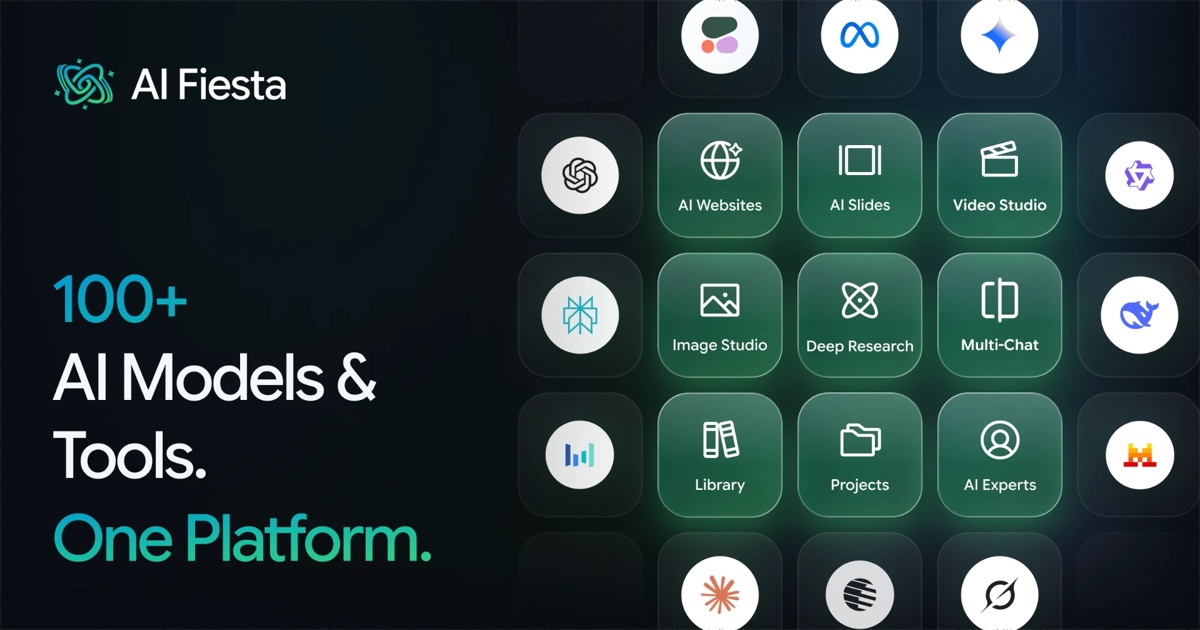
Instagram can no longer be the paid on-ramp to TikTok the way it was two weeks ago. TikTok is tightening the links that open other social apps. And Meta is testing versions of Instagram and Facebook that open straight into full-screen vertical video.
None of these moves is a small product tweak. Taken together, they change one of the most common growth playbooks in the creator economy: build on one short-video app, then push that audience onto another.
The ban on TikTok ads across Meta platforms took effect on October 8, 2026. The link restrictions on TikTok are already in the support docs. The Reels-first and video-first tests are live in a limited set of countries. This edition breaks down what actually changed, why both companies are doing it, and what you should change in your own setup this week.
What Meta banned
Meta has banned ads from ByteDance, TikTok's parent company, on Facebook and Instagram in seven countries: the United States, Canada, Egypt, Indonesia, Japan, Thailand, and Vietnam. The Verge reported the change, building on earlier Bloomberg coverage. The ban took effect on Thursday, October 8, 2026.
It is not limited to ads placed directly by ByteDance. It also covers third-party ads that link to TikTok. That is the detail that matters for creators and agencies. A boosted Instagram post whose destination is a TikTok profile can now be rejected in those markets under the same rule. A brand campaign that used Meta inventory to send people to TikTok faces the same constraint.
Meta spokesperson Christopher Sgro told The Verge that the company does not have to carry ads from "a competitor whose goal is to pull people off our apps," and framed the refusal as normal business practice. That sentence is the strategy in one line. Meta is no longer willing to rent its distribution so that another short-video app can take the viewer away.
The Verge also noted the wider context. Meta agreed earlier this year to a $17 billion child-safety settlement that included new teen restrictions, and has since urged TikTok and YouTube to adopt similar safeguards. TikTok reportedly declined to run a Meta ad campaign on that theme. Whatever the mix of competitive and policy motives, the practical outcome for creators is the same: paid Meta inventory is a weaker bridge to TikTok than it was before October 8.
This is not a shadowban and it is not an algorithm mystery. It is an advertising policy. You can see it in the review outcomes on your ads account. That makes it more actionable than most distribution changes, because the fix is not "make better hooks." The fix is "stop sending Meta traffic to a destination Meta has decided not to fund."
What TikTok changed on the way out
The restrictions run both ways. TikTok has stopped allowing users to include links that "open or log you into other social media apps," according to wording on its own support page, as reported by The Verge.
That rule hits a different part of the funnel. Meta's ban targets paid promotion into TikTok. TikTok's rule targets organic and profile-level links that send people out to Instagram, Facebook, X, or similar apps. Creators who used TikTok as a top-of-funnel channel and then pointed viewers to another social profile need to re-check what still works.
This did not start last week. According to reporting summarized by The Clarity, TikTok made changes in September that limit how users can leave its app for other social platforms, including removing dedicated Instagram links from user profiles. Meta's ad ban, in other words, landed on top of a door TikTok had already started to close.
The sources do not spell out every edge case. A link to your own website or newsletter may still be treated differently from a link that opens Instagram or X. That uncertainty is itself a reason to stop relying on rival-app links as the main bridge between audiences. Confirm what your profile and captions are allowed to do before you assume the old setup still holds.
If your growth system depended on a TikTok bio link that opened Instagram, or an Instagram story link that opened TikTok, you now have a single point of failure owned by someone who is actively competing with the destination. That is a fragile system. Fragile systems break on weeks like last week.
Meta is also trying to look more like TikTok
While Meta is blocking paid paths to TikTok, it is simultaneously testing product surfaces that behave more like TikTok inside its own apps.
On Instagram, app researcher Radu Oncescu spotted a setting that opens the app to Reels instead of the usual feed. Stories stay at the top. Swiping up reaches the feed of followed accounts. Meta spokesperson Devi Narasimhan told The Verge the test is running in a small number of unnamed countries and that users can switch back.
On Facebook, some users in India and Indonesia are landing directly in a full-screen video feed, according to TechCrunch as summarized by PetaPixel. Users in the test can opt out. The classic feed remains available as a second tab. Facebook head Tom Alison outlined the idea in July and said the company would explore bringing it to the United States next year.
The competitive logic is straightforward. Meta wants the vertical-video session to happen on Instagram and Facebook, not on TikTok. Blocking ads that send people to TikTok protects that goal on the advertising side. Opening the app into Reels or a video feed protects it on the product side.
None of this is entirely new. TechCrunch points out that Meta said last year that all new videos posted to Facebook would be shared as Reels, that it renamed the Video tab to "Reels", and that it has said young adults spend about 60% of their time on Facebook watching videos. Instagram also tested a Reels-first experience for some users in India and South Korea last year. What is new is that the tests are now running on both apps at the same time, in the same week Meta closed its ad inventory to TikTok.
Not every test becomes a permanent feature. Meta has run versions of this experiment before, and some were rolled back. But the direction has been consistent for years, and the cost of preparing for it is low. Creators who treat Reels as a second-class format relative to TikTok are now fighting the direction of the product on Meta's side of the fence.
Why this matters if you grow across platforms
For years, a common playbook looked like this. Post short video on TikTok. When something works, republish it on Reels. Boost the Instagram version toward people who might follow you on TikTok, or put a TikTok link in an Instagram story. Or reverse the flow: grow on Instagram, then move viewers to TikTok for a second algorithm to work on.
That playbook assumed the platforms would tolerate traffic moving between them. Last week's moves reduce that tolerance.
Paid promotion from Meta to TikTok is constrained in seven countries, including the United States. Outbound social links from TikTok are constrained by TikTok's own rules. And Meta's video-first tests increase the reward for posting native vertical video on Instagram and Facebook even as cross-promotion gets harder.
The practical effect is not that cross-platform creators should quit one app. It is that the cost of depending on one platform to feed another just went up. Distribution you do not control is getting more expensive and more fragile at the same time.
There is a second-order effect that is easy to miss. When paid bridges between apps close, organic "post everywhere" strategies look more attractive for a moment. Then you remember that each platform still ranks for its own signals. Identical captions, identical hooks, and identical posting times do not produce identical results. Cross-posting remains useful. Cross-posting without a destination you own remains incomplete.
What this means for creators at different stages
If you are early and concentrated on one platform, the immediate risk is smaller. You are not yet moving large paid budgets between apps. Your job is still to make work that holds attention on the platform where you already post. The Meta video-first tests are a reason to take Reels seriously if Instagram is in your mix, not a reason to rebuild everything overnight.
If you are mid-stage and already running the same clips on TikTok and Reels, treat the next two weeks as a measurement window. Watch whether boosted Instagram posts that mention or point to TikTok still clear review in your country. Watch whether TikTok profile links that open other social apps still function. Replace any broken bridge with a destination you control before you lose the habit of sending people somewhere specific.
If you are established and spending on Meta ads to grow a TikTok audience, re-map the funnel this week. The ban on third-party ads that link to TikTok is the constraint. Alternatives that still make sense: drive Meta traffic to a landing page or newsletter you own, then move people to TikTok from there if you need to; grow TikTok with TikTok-native Spark Ads and organic distribution; use creator collaborations inside each platform rather than paid cross-links between them.
Agencies sit in a special category. If your clients have been buying Meta reach to fill TikTok funnels, the creative may still be fine. The destination URL may not be. Update the offer architecture before you burn budget on ads that fail review for a policy reason rather than a performance reason.
What creators should do right now
First, audit every paid Meta campaign whose destination is TikTok. If you are in one of the seven countries named above, assume those ads can be rejected and prepare a replacement destination you own.
Second, open your TikTok profile and any link tools you use. Remove or replace links that open Instagram, Facebook, X, or other social apps if they now fail. Prefer a single owned URL: your site, your newsletter signup, or a link hub you control.
Third, if Instagram or Facebook in your region is testing a video-first open, post at least one native Reel this week that you would previously have reserved for TikTok only. Meta is signaling where attention will sit when someone opens the app. Meeting that attention with native video is cheaper than fighting it.
Fourth, strengthen the bridge neither company can close. An email list and a site you own do not care whether Meta and TikTok are fighting. If you have been treating your newsletter as optional, last week the platforms made the case for you.
Fifth, write down your actual funnel on one page. Platform A to Platform B to offer. Circle every arrow that depends on a rival-app ad or a rival-app link. Those arrows are the ones last week attacked. Replace them with arrows that end on something you control.
What this does not mean
Because news like this travels fast, it is worth being clear about the limits of what actually happened.
This is not a ban on TikTok creators using Instagram, or on Instagram creators using TikTok. You can still post on both. You can still mention that you exist on the other app. Nothing in the reporting says organic posts that talk about TikTok are being suppressed on Instagram. The ban covers ads and paid marketing messages from ByteDance, and third-party ads that link to TikTok, in seven named countries.
It is also not a global rule. If you live and advertise in France, Brazil, or the United Kingdom, none of those markets appear on the list reported by Bloomberg and The Verge. That could change, and it would be wise to assume it might, but today the restriction is limited to the United States, Canada, Egypt, Indonesia, Japan, Thailand, and Vietnam.
And it is not a reason to panic about your reach. A Reels-first test in a handful of countries is not a new algorithm. It is a change in what people see first when they open the app. If anything, it is a reason to make better native vertical video, not a reason to abandon the formats that already work for you.
What it does mean is simpler. The two largest short-video companies outside YouTube have both decided, in public, that they do not want to help each other grow. Your strategy should be built with that assumption in mind.
The X parallel every creator should understand
X has made similar choices in the past, and creators have long debated how much it limits the reach of posts with external links. Meta and TikTok are now applying an explicit, written version of the same idea to each other. Platforms want the viewer, the ad dollar, and the creator workflow to stay put.
That does not mean you should be loyal to one app. It means your growth plan should assume each platform will keep making rival exits harder. The creators who stay calm through that shift are the ones who already own a direct channel to their audience.
You have seen this pattern before in smaller forms. Link-in-bio wars. Debates about outbound link reach. In-app browsers. "Stay here" product design. Last week was simply louder because two of the largest short-video competitors moved at once, in opposite directions, toward the same goal: keep the session.
Meta and TikTok are competing for the same vertical-video session, and both are willing to break the old cross-promotion playbook to win it. Build on both if that is your strategy. Just stop letting either one be the only way people find the other. The bridge you own is the one that still works when the doors close.